


Mia Giambalvo
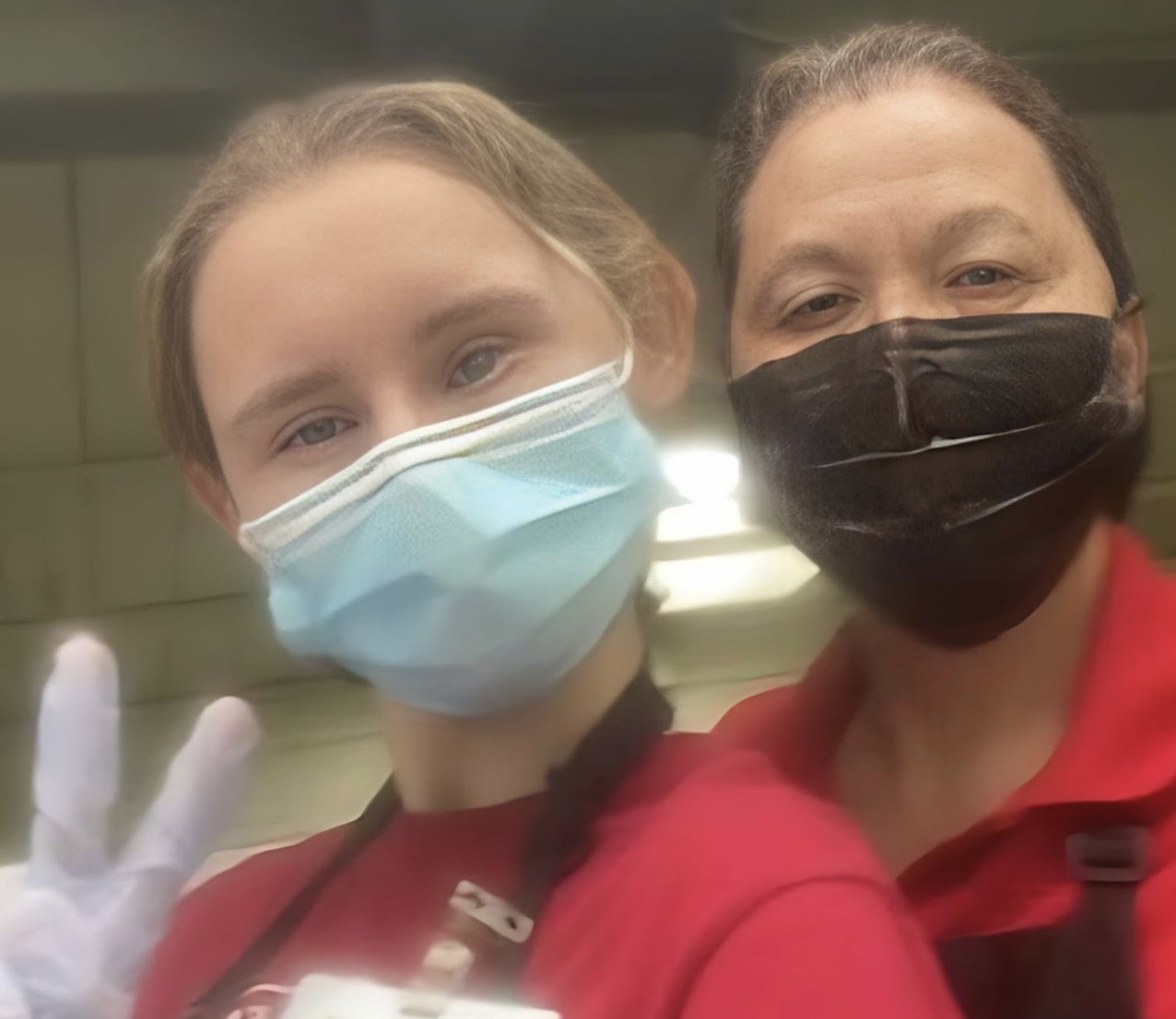
Mia is a high school sophomore at Larchmont Charter School. She’s been going to school in Koreatown for about four years and has taken an active role in improving the community. She is very involved in her school’s Community Service committee and is a member of Girls Build L.A., which works on different projects to help the neighborhood. She has been working as a waitress at the Solheim Lutheran Retirement Home in Eagle Rock during this COVID-19 pandemic. She volunteered there many times before officially getting a job. She hands out meals for the residents and helps out in the kitchen. It has proved to be a very meticulous and important job during the pandemic, as most of the residents are at risk.
There’s More Work To Be Done
Interview by Eunice Shin
Where is your hometown?
My hometown is Los Angeles. I was born and raised here.
Do you work or live in Koreatown?
Neither. I go to school in Koreatown.
What are your thoughts on Koreatown?
I really like it. I think it’s an amazing neighborhood and community, and I think it blends affordable housing, food, schools, parks, and community services all together. I think that’s really impressive and something that a lot of other Los Angeles neighborhoods don’t do.
What is a significant memory that you have of Koreatown?
A significant memory is when I first went to school here. I’d never taken the bus before without my dad. On the first day of school in seventh grade, he drove behind the bus because he wanted to make sure that I knew how to take it correctly. It was the first time that I’d seen all of Koreatown, and I later drove through it again on the way back to my house. I fell in love with taking public transportation. It’s something that I’ve lost a little bit as I’ve gotten older because it’s easier to have someone drive you, but at that age, I felt so independent to be able to do that. It felt like I was in an area of L.A. that I hadn’t been in before, so I felt grown up even though my dad was behind me.
Where is your favorite place in Koreatown?
Madang is my favorite place in Koreatown. It’s an outdoor mall, and it has a lot of restaurants and a cold cereal bar where the smoke comes out of your mouth. They also have a movie theater and an anime store for manga.
What part of Los Angeles do you currently live in?
I live right before West Hollywood, near Fairfax by The Grove.
Why did you decide to go to school in Koreatown?
I’d been going to [Larchmont Charter School] since I was 5 years old. The first campus was in my neighborhood. It was called LCW, Larchmont Charter West Hollywood, and then the [Larchmont Charter School directors] made a bunch of different campuses. I moved to one, and that was in Hollywood for middle school, but it was all the same school, you know?
For high school, they spent a lot of time trying to find the right place to buy, and it took a while, but then they found Lafayette Park. It wasn’t a very popular decision, not for the location, but for the building. People wanted it to look more like a conventional high school, but I think they couldn’t find anywhere else to buy it — at least that’s what they say. So, they bought it, but it has come a long way since it first started.
I had the option to go somewhere else, but I feel comfortable here because my parents helped make the school. Charter schools are schools that parents start themselves because they think that the public schools in the area don’t fit their children’s needs. It’s kind of like a school run by the people, you know? They don’t really get any funding except for private donations, and so I kind of feel weird about leaving the school because I feel loyal to it.
Do you feel that you’re helping build a legacy in Koreatown?
I definitely do. I feel like Larchmont has become very well known. It’s a very small school, but it’s at least well known in Koreatown, and we’re really close to Rise Kohyang, which is a school that’s existed in Koreatown for much longer. I like the relationship we have with them; we both use the park. I feel like we’re making a legacy by combining all the neighborhoods.
Before we had a campus in Koreatown, we didn’t have that much diversity at my school or any of the campuses. Like, when we were in West Hollywood, I don’t know [what it was] about it, but maybe because it was closer to the families there, we didn’t have much diversity. Since we’ve made a campus in Koreatown, every campus is more diverse. That’s how it should be because that’s what the real world looks like, and schools that aren’t diverse just create a bubble of not knowing what the real world is going to be like. It kind of breeds racism. I’m glad that we’re here, and I think we are making a legacy of intertwining cultures.
Do you feel that the community at Larchmont is perfect the way it is now, or do you think some things could be improved?
I think we have so much to work on, like teachers working on themselves, administration, and students bettering themselves. Quarantine, as a whole, is a time to self-reflect and improve yourself. I can definitely tell that the teachers at my school took that time in quarantine to become better teachers, but there’s more work to be done.
We have some problems with sexual assault, and we used to have a lot of bullying problems. This is prevalent in every American high school, but I feel like it’s not talked about enough. Those things are seen as a normal part of the high school experience. Stuff like cliques is a normal part of the high school experience, but bullying shouldn’t be. I think the only way to fix that at my school is to start with the younger kids. I don’t want to say that my grade is too far gone or something, because we’re not, but we’re about to graduate. Most of the work they must do is with the younger students, making sure that they don’t turn into what some kids have become at our school.
How do you feel you’re contributing to the community at Larchmont? Do you feel like you’re doing something to help improve it or make progress toward this ideal high school experience?
I do a lot of service work at Larchmont. To touch base on what I said prior about sexual harassment and assault being a problem in my school, my capstone project — a class we have at my school just for service projects — is to create a SafeBAE chapter, which is an organization that educates on sexual harassment and assault. Mostly, we would take over the role of sex education at my school because we didn’t have a nurse or a health teacher before. All the sex education that’s happened at large has been undertaken by history teachers. It’s really weird; every year, they teach us sex ed in history class because we don’t get funding for it. They have to sneak it into our curriculum, and so it’s not done properly. It’s just bad.
I think that’s why sexual harassment and assault are such a problem at my school. I think it has a direct connection with our horrible sex education. We don’t teach people what consent is, and then we act surprised when they don’t have a good relationship with it. It’s not a child’s responsibility to know all of that when they suddenly enter middle school. They’re going through puberty; they shouldn’t have to know how to do that. Someone should teach them, but parents, I feel, are so nervous to teach their kids about sex because they think it will make them want to do it.
Meanwhile, people don’t receive any information, so they try to figure it out on their own, and they figure out the wrong stuff. There are a lot of guys in my grade who get all their information from older guys. The seniors will tell them, ‘Yo, this is how you get girls,’ and it is horrible information. That’s not what a healthy relationship looks like, and so my club is going to teach sex ed to all the classes in an actual sex ed class. We’re going to hire people to do it, train people, and beyond that. We’re also going to make a website where people who have been assaulted or harassed at my school can post their stories. That’s just one way that I’m going to try to help my school community.
I feel like my school really needs stations — almost like bulletin boards on each floor — about different subjects. One should be for mental health resources and have all the hotline numbers visible. If you want to go there and no one’s around, you’ll be able to take a card. Just having a place where you don’t have to ask someone for it, because, in the guidance counselor’s office, we do have pamphlets, but it’s nerve-wracking to go and ask for that.
I know that you can look it up on your phone and find a hotline, but that doesn’t work super well, speaking from personal experience. I’ve called an eating disorder hotline before, but a mental health hotline, like suicide prevention, was the first result to pop up when I looked it up. It wasn’t at all what I was looking for; it was really awkward. It wasn’t the right number and was not intended for children or people under 18. The other [hotline] was just to give you resources.
That was at a time when I really needed the number, you know, for the right person, and I couldn’t find it online. The way I always imagined what a hotline number would be like is someone on the other end who says, “Hello, I’m a therapist. I’ll listen for an hour,” and I now realize that’s not what a hotline number is for. That’s why providing kids with specific resources, rather than just hoping they’ll find them on their own, is important. There’s definitely a huge difference between all those resources. Some can work well for some people, and then some don’t work so well for others.
I’m not going to try to expel or suspend the harassers and assaulters whom I know because they honestly don’t deserve that type of attention. I’ve tried it before, and it didn’t work. It’s much more important to give attention to the victims and to focus on how many people are raped and assaulted rather than on how many people are rapists and assaulters, if you know what I mean. Also, what’s really sad is that at my high school — I think this is just every high school — I honestly believe that most guys have harassed someone before. Even my guy friends feel bad about it — of course, or they would not be my friends — but they have done things in the past where they’re like, ‘Oh, three years ago, I asked that girl for nudes. I feel so bad about it. What should I do?’ Hearing that as a girl makes me go, Oh my God, because I imagine if I were that girl. I do have my own stories like that, and all my friends hate those guys, but it’s like every [emphasis added] guy.
When we’re talking about and teaching sex education, it’s honestly for everybody because I think most people have already made mistakes and made people feel uncomfortable before. The world isn’t really black and white. A lot of people, like Cardi B — she’s obviously had a hard life. I think she’s experienced assault as a stripper. I’m sure she’s received a lot of male attention in her life, but she’s also drugged and assaulted men. It’s like she did the same thing. So when I’m in school, I think the point is not to [put blame] on just anyone. It’s just to say, “Okay, there’s a problem here, and it’s all our problem, and we all have to deal with it together.” It’s less stressful when we feel like we’re all in it together.
How do you feel the #MeToo movement has affected your desire to create this club at your school and tell the stories of what’s going on in your school community?
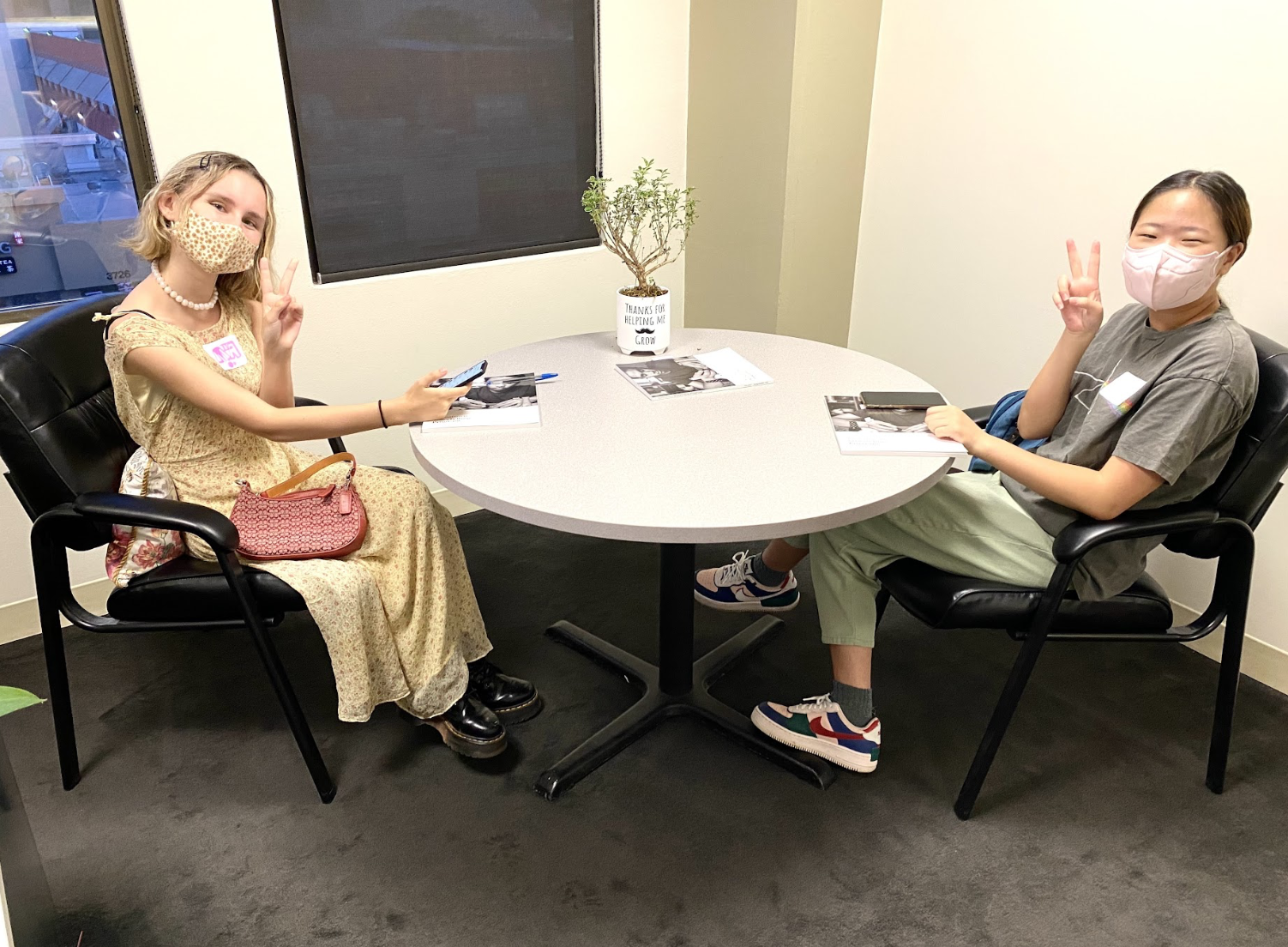
I’m also the leader of this club, Cats and Dogs, at my school. We call it “Cats and Dogs” because we can’t call it “Queens and Bitches.” It’s a female-only club. If you identify as nonbinary or female, you can join. We mostly talk. It’s just a safe space. Many people have shared their stories. It’s basically just a #MeToo movement because actual people are saying out loud, “Me too, me too.” In that club, I think I got to see the #MeToo movement in person, and not only that, but also through the young girls in front of me. I got a lot of my inspiration from that club to start this other club.
Having a room of only girls, our goal is supposed to be about female empowerment. What we really want to talk about is not rape and assault. We want to go into that club and talk about breaking the glass ceiling and what our goals are for the future. We don’t want to sit and talk about sad, depressing stuff. When you hear about a club for female empowerment, you shouldn’t imagine a roomful of girls talking about all the horrible things they’ve experienced. However, that was our club for a long time because before we could go into that female empowerment, we had to realize that it’s okay to be angry and that it’s not all just “girl boss.” It’s great to be a girl. It’s great to be a woman, but it’s okay to be angry. That’s definitely the vibe of that club, and the #MeToo movement is really just about how you can ask a roomful of women, and every single one of them is going to have a story to share. It’s very crazy, and that’s what motivated me to start this club.
After you graduate from high school, how do you want to use your club, and where do you want it to go? How do you want it to expand in Los Angeles? When you go off to college or a future job, how do you want to utilize your experiences for future endeavors?
I’m creating the SafeBAE club, like the one where people can share their stories, as a response to the schools being so bad about taking it on themselves. As I said, it’s practically impossible to suspend or expel somebody for rape, assault, or harassment because they’re really hard to prove, which is why they don’t do well in courts either. And so, they don’t do great under school supervision as well because principals have a hard time proving that it happened.
It’s not just regular high school drama. It’s so much more serious. I really hope that won’t be the case in 10 years. I hope that somehow it will change the protocol for how they deal with accusations of assault and rape. That’s one thing I hope my club will help change, and I’m not even sure how to do that. I understand how the principal must be feeling, but I wouldn’t know how to address that either and prove it because you can’t. You’re liable for so many things if you expel somebody without proof, because then that person’s parents are going to be really upset. That’s one thing I want to change. I guess my club is like figuring out what the protocol should be.
I’m really interested in politics, so I want to learn the specifics of legality, the law, and what the schools should be doing to protect their students. Because of how much gray area there is, what should we do when someone accuses a person? They just don’t do anything. We do way more for reports of bullying, like sending kids home early, having five-minute reflections, or calling home. But someone can go in and report assault or rape, and nothing will happen. I want to change that.
It’s difficult to define assault or sexual harassment, and parents tend to see sexual assault differently from our generation. It’s something we want to talk about more and something that we want to open up about. I feel like older generations kind of have this “Don’t Ask, Don’t Tell” mentality, and when they think that their child might be a harasser or an assaulter, they go right into defense mode.
Would you say that your club is moving toward changing that mindset?
I think it is. My brother is 18 years old. I’ve definitely thought before about what I’d do if I found out he made another girl feel uncomfortable. My first reaction might be, He can’t do that. He’s my brother. Honestly, that is a human response. I want to get to a place where, no matter who it is, you believe the person. The way I see it, knowing someone romantically and sexually is way different than knowing them platonically. I know my friends like the back of my hand, but they’re so weird in relationships. Some of my friends — I don’t know — like calling each other “Mom” in their relationships, but they’re nowhere near that weird with friendships. I’m glad they keep it separate.
I feel like it’s the same thing when people say, ‘That person would never rape or assault someone because I know them like a friend.’ If you’ve never hooked up with that person, then you don’t know if they would rape or assault someone; even family members and parents do not know what their kids are like behind closed doors, especially in a bedroom. It’s sad to be the parent of someone like that, but it’s also a job as our generation becomes parents, you know? I want to be a different kind of parent as well. I hope our generation’s children are better adjusted than we were.
How has social media fostered your desire to tell stories?
Actually, that’s where I got my idea. In the summer after quarantine started, like in 2020, there was an Instagram account called @WeWillNotBeSilenced. It was for all L.A. schools, and they posted stories about people being raped, assaulted, and harassed — and they gave names. So that’s where I got the idea from: social media. Social media played a huge part in it.
The thing is, that account did not end super well; they ended up getting sued by all these different people because they gave people’s names. It was correct information, but they still got sued, so it taught me what not to do. You can’t just expose people. Although I wish you could, you just can’t. That taught me a lot, and it was amazing to see the comments of people being like, ‘I’m so sorry. That is horrible.’ It [made me think] about the person who sent [their story] in. That might’ve been the first time they’d ever received such words. It could just be a random person on the internet, but it is still so meaningful.