

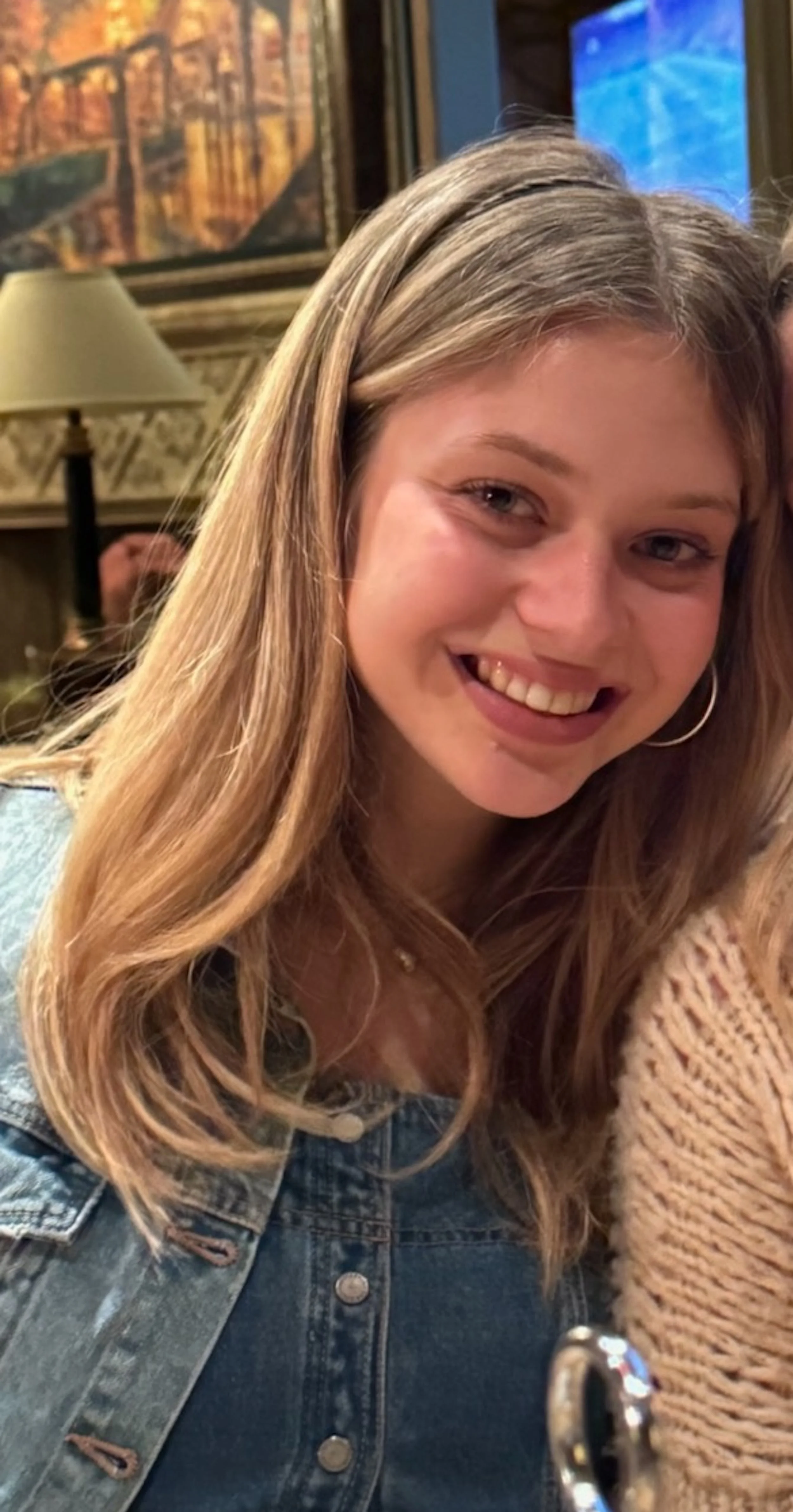
Penelope Salomon
Penelope is a senior at the International School of Los Angeles, enrolled in the International Baccalaureate Programme. She is a part of the Koreatown Storytelling Program’s Oakland Koreatown Project and is excited to learn more about the Korean community in her hometown and the Bay Area. The idea of recording people's unique oral histories and documenting their individual narratives ignites her passion for oral history. As a part of KORYO, she is looking forward to making a difference in her community and trying to decrease the effects of addiction. She hopes to pursue a career in international relations, political science, or journalism.
It’s Not a Simple Issue
Interview by Kate Kim
Where is your hometown?
Although I live in Burbank and Santa Clarita — Burbank with my mom and Santa Clarita with my dad — I consider Hollywood my hometown because that’s where I grew up.
Do you work or live in Koreatown?
I do not. I don’t have much experience with Koreatown, and that’s one reason I’m excited about this project. One of my best friends spends a lot of time in Koreatown, so she’s the only one taking me there. I’m excited to explore more areas.
What are your thoughts on Koreatown?
It’s such a cool place. There’s so much culture, and it feels so alive. There are so many parts of L.A. that are destitute, but it just feels vibrant in K-Town. I’ve eaten so much good food there! A lot of the stores are cool as well. When I was doing my slime, I would get a lot of clay there. I remember going to Koreatown and getting supplies.
Where’s your favorite place in Koreatown?
See, that’s the thing. I don’t really know because I don’t have much experience there. I don’t have an answer yet, but I’m excited to get one.
Is there a place that you like to go to in L.A.?
I really love the Americana. There’s so much to do, but the thing is, I need to slow my roll there because I just spend money whenever I’m there. It’s so hard not to be like, Yeah, I’ll get a Wetzel’s Pretzel.
Do you have any hobbies?
I love playing the guitar so much. I really love it, and I love playing music with other people. I’m trying to get into producing more. I love Jimi Hendrix’s guitar playing, so my favorite song to play is probably “The Wind Cries Mary.” I’m also learning “Little Wing.” It is so hard and takes a lot of time to learn, but it’s a lot of fun.
Do you have any significant memories from growing up?
I love the rain, and I have a distinct memory of my friends and me having a sleepover at my house — my old house when I was younger — and the roof leaking. We woke up to the sound of my mom [clanking] pots and pans all over the kitchen; there were just like buckets and buckets filling up with water. My mom was running around like crazy, but we saw it and were amazed that it could rain inside. So we just stood in amazement at the discord, and that’s a moment that I remember being really, really happy.
What school do you go to?
I go to a very small school in Burbank. It’s a French school called LILA (Lycée International de Los Angeles), and it’s so small that nobody has ever heard of it.
How big is your school?
To put it in perspective, my grade is one of the biggest, and we’re under 60 kids. I’ve been there since kindergarten. My school likes to say that we’re one big family. And it’s not that I dislike my school, but you get to know people and realize, Oh, maybe I don’t really super duper get along with this person. It’s not that I don’t like them, it’s just that I don’t want to spend all my time with them.
Are you taking an elective at your school?
I’m in music class, which is a lot of fun. For extracurriculars, I’m a part of the social justice committee and debate. Debate is good! I was in MUN (Model United Nations) during middle school, and I ended up switching out of it because a teacher took over, and I was not a fan of hers. I switched to debate — I joined online, so I didn’t get the opportunity to participate in many tournaments because they were on Zoom. Honestly, I was so scared. But it’s been cool.
I’ve learned a lot about public speaking, confidence, and being confident in your ideas. I’m not a very confrontational person, but when you’re in debates, sometimes you have to be because people can be mean and aggressive, so you have to step it up a little bit. It also made me more driven to be aware of what’s happening.

Is there a dream school or college you want to attend?
My dream school — dream, dream, dream — would probably be Barnard [College of Columbia University]. I’ll apply to the UC schools because they’re so good, obviously. But I do love the East Coast, so I would love to go to New York. My parents are from Canada, so I have Canadian citizenship. Going to a Canadian school would be even cheaper than a UC school, so I’ll definitely apply to them.
What do you want to do as a career or in the future?
I don’t know. I’m interested in political science, journalism, history, and English literature. I want a minor in business or something interesting. I would love to be an investigative journalist; that would be cool. But then I also love music, so that would probably be my dream.
I’m so back-and-forth on the idea of “Life is short, but you should try to have a stable income and take it seriously.” But you only have one life! Do what you want and what makes you happy.
Why did you join KORYO?
I am in the Koreatown Storytelling Program as part of the Oakland Koreatown project. I’m working with somebody who lives in Oakland and is interviewing people to get records about Koreatown in Oakland and the Bay Area. Dilan (KSP program associate) was one of my supervisors. She said she was part of a program about to get a grant to do a study on opioids and their effects on Koreatown and how the community can be helped. That interested me because my family has a history of addiction, so I was inspired to try to be a part of [KORYO].
What do you know about opioids?
Well, my aunt — I’ve only met her once — has substance use disorder. She had some issues with alcoholism, and then she had surgery, got prescribed opioids, and ended up getting addicted. Something that’s always been clear about my dad’s relationship with her is that it’s really not the person’s fault. They have no control over it.
Something that’s stuck out to me is how, in movies and TV shows, or even the news, I’ve heard the phrase “You’re strong enough” or “Be strong enough to beat addiction.” I think that promotes such a harmful ideology that it’s something you have power over because it’s not a question of whether you are strong enough; it’s a question of [whether] the circumstances are perfect for you to be in a position where you can receive help. It’s not a question of mental strength. But that’s the implication.
If you’re not strong enough to beat this, then you’re too weak? And that’s not a question at all. Is it not a question of strength or weakness? That’s something that’s always been clear to me, and that’s something that they’ve talked about in the program, which has been nice. We saw a video [during a KORYO meeting] of a woman saying it’s mothers, fathers, and doctors, you know? It can affect anyone and everyone, and that’s why we should promote awareness.
Thank you for sharing that. I agree. TV shows one story, but it’s not the same situation for everyone.
One hundred percent! I totally agree. It’s so complicated, and it’s not a simple issue. It needs to be treated with compassion and patience. But it’s so painful — so painful and sad.