

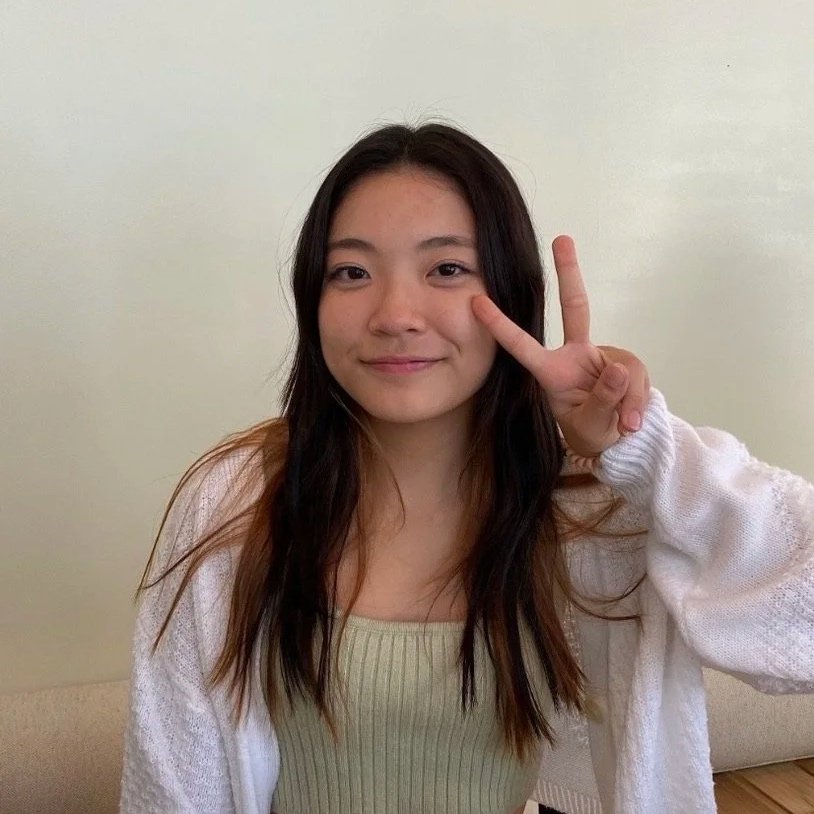
Abigail Kim
Abigail Kim is a junior at New Covenant Academy (NCA) in Los Angeles. She has lived in Los Angeles for the majority of her life and attended NCA since fourth grade. She joined KSP because she wanted to explore and learn more about the different aspects of Koreatown and other people's perspectives. Abigail lived with her Korean-speaking grandparents for the first ten years of her life and is fluent in Korean and English. Abigail is interested in the medical field and volunteers at different hospitals. She is also the vice president of her school’s student council and is a member of the school’s journalism club. She participates as a member of the school cheer team and is very confident in announcing her opinions. Abigail hopes to attend USC and study pre-med to become a registered nurse in the future.
Where East Meets West
Interview by Cira Mejia
Where’s your hometown?
My hometown is for sure Koreatown. I was born and raised here. I was born at the Good Samaritan Hospital. I think almost all of my siblings were born here.
Have you always gone to school in Koreatown, or have you gone to schools outside of Koreatown?
When I was 2 years old, I had to go to Korea and Japan for a bit because of my mom’s visa problems. While I was in Japan, I went to preschool there for about a year. I don’t have a lot of memories from there, but I do have some of Japan and what it was like being a child there. But back to Koreatown, yes, I’ve been going to school there since kindergarten. I went to public and charter schools, but I’m attending a private school right now.
How do you get around Koreatown, like school-wise?
In the beginning, when I went to school, my parents usually gave me rides. These days, I’ve been riding the bus and subway a lot because my parents are very busy taking care of my younger siblings. In the morning, it is kind of hard to give me a ride because I’m part of the student council, and there are times when I have to go to school early. On those days, I usually ride the subway or go to school on the bus.
I’m experiencing Koreatown or L.A. on a different level because there are so many weird people on the subway. I’ll just be walking around, and then there are people pooping or peeing on the floor. It’s kind of weird because there are public restrooms. I don’t know why they’re doing that. It’s kind of the negative stuff that most people don’t know about or see.
When I told my friends in Korea that I live in Los Angeles, the first thing they told me was, ‘Oh my God, you must be rich!’ I’m like, “No, it’s not that. There’s different stuff in Koreatown.” Going back to your question, I usually get rides from my parents, which I’m very thankful for because I don’t like riding the subway a lot.
Going back to what you were saying about your friends in Korea, what is something positive that you would say about living in Koreatown?
I think Korea is very, very strict. They’re strict about everything there, so busy, and always try to make everything so packed. Recently, I went to Korea, and my little sister is not fluent in Korean, so when she didn’t understand what they were telling her to do, [people there] got mad at her. They were like, ‘Oh my goodness, I told you multiple times to go that way!’ She was kind of upset because, you know, nobody speaks to you that way in Koreatown. If you mishear, they’re more polite. I feel like Koreatown is much friendlier in those kinds of aspects.
Wearing clothes that are too revealing or short is very new to Korea. When I went to Korea, the clothes I wore here in Koreatown were crop tops or short mini skirts. If I wore that in Korea, random grandparents — not even my grandparents — would just come up to me, and they’d be like, ‘I wouldn’t wear that if I were you. You’re still pretty without wearing those kinds of clothes.’
In Koreatown, nobody would say that to you. You know, people usually just mind their own business. If not, they [compliment] you, like, “Oh my god, I like your shirt today.” “You look pretty today.” Those are definitely more of the positive things I know about Koreatown.
Okay, so there’s definitely a big social aspect to living in Koreatown. How would you say your experience living in Koreatown differs from your friends’ experiences living in Korea?
[Since everything’s] so packed together in Korea, it’s much easier to move around and stuff like that. But going back to what you asked, I think America has a different view and culture than Korea because my friends in Korea keep to themselves more and aren’t really open to new concepts, even with identity. If you say that you’re queer, people would react, or they would pause for a bit and maybe have to process that. I feel like that would never happen in America. It is definitely more inviting here.
Growing up here, I’ve been given more opportunities to interact with different people from [diverse backgrounds]. In Korea, if you go there, it’s almost all Koreans. These days, it’s been getting better. You will see some foreigners, but not many, and you can only see them in certain places in Korea, like the hot places. But in America, wherever you go, you’re going to see different ethnic groups or different people. Being given the opportunity to [meet] different people when I was younger [helped] me to become more comfortable living in the world.
Do you think living in Koreatown has given you a more open-minded perspective on the different cultures here?
Definitely. First of all, I don’t know how big Koreatown is, but from my perspective, it’s pretty big. Wherever you go, you’re going to see many different people with different personalities. There are people who like certain stuff and people who like other stuff. Getting to experience that firsthand gives you a different experience of culture.
Like I was saying before, in Korea, people catch on to trends really fast. But once that happens, everyone dresses the same, has the same hair, wears the same glasses, or eats the same food. In America, even if there are some trends people follow, there are also others who do stuff that they are more comfortable with or think is better suited for them.
My friend would dye her hair blonde, but then I would keep [mine] black because I like having my hair black. I know some guy friends who don’t want to dye their hair ever, and then some who bleach their hair every other Saturday or something. Even if it’s that kind of stuff, it’s so different, even in my own ethnic group in America. Experiencing culture is not just about ethnicity and that kind of diversity; there are other personalities that you can encounter here.
I go to a Korean church. But we have a separate youth ministry for English-speaking people. In that, you can already see the different backgrounds people grew up in and how that affects the way they act, like the way they talk and stuff. I have friends from church, and they talk really — I wouldn’t say sassy — but kind of like that because they go to a school where the majority of people talk that way. If I go to their school, the majority of them will talk the same way. Even that, I want to say, is a different culture.
It’s different at my school. At my school, people are more — I don’t want to say tame or sheltered, but they kind of are. They don’t really talk that way or are not as outgoing. Just going to different places in K-Town, you’re going to experience many different cultures and people, and I feel that’s like an opportunity in itself.
Speaking of Korea, what’s something in Koreatown that’s the closest to Korea or reminds you of it?
Personally, at the beginning of high school or the end of middle school, I was really into BTS [a popular K-pop group]. I would go to Madang Courtyard and the K-pop store there and try to find BTS albums and stuff. That kind of stuff is so well done in Korea because [Koreans] are very proud of their culture and of the people or groups like BTS that represent South Korea. That’s one of the things I would be able to experience in Koreatown.
There’s also food. A lot of people from Korea come to America and start businesses, and usually those businesses are Korean restaurants. [One place] I go to is this seolleongtangjib (설렁탕집 — a restaurant that serves ox bone soup). It’s this beef broth soup place, and it’s really good. I feel like those are the things you can taste from Korea. If you taste it, it’s like, Wow, it tastes like Korea! Those kinds of things give me memories from when I went to Korea.
Obviously, food in Korea has shifted more to the American taste, but more people are into spicy food there. [Koreans] are very into food; they’re always eating food, and a lot of it at once. They think of creative ways to eat food. They would have tteokbokki (떡볶이 — spicy simmered rice cakes) but randomly add ramen to it, and then they would eat that, and all of a sudden, that’s like a whole different meal category.
There’s a really spicy ramen, and it’s a whole challenge to eat the spiciest one or that kind of stuff. If you go to a Korean market, you will see all those products from Korea. Even though I do miss some stuff from Korea, I’m able to experience the same type of [food] in America, even if it’s just me making it at home or going to a specific restaurant where they make those foods. I can experience both Korea and America at once in Koreatown.
Speaking of eating food like that, I like to go to Korean food chains that [have come] to America. Those kinds of places are the most interesting because sometimes they taste very different from what it’s like in Korea. They have specific recipes and stuff in Korea, and I don’t know if that was mistranslated in America or something, but it would taste a little different or have different or more ingredients here.
Going to those kinds of places is interesting because I don’t go to Korea often, but when I do, the first place I go to is a convenience store. In America, convenience stores are not that great compared to Korea or Japan. In Korea, there is so much good food, drinks, and snacks. There are different kinds of things — you can basically find anything in a Korean convenience store. It’s a place where you can go every day and won’t get tired of it. When I went to Korea, I think most of the money I spent was at the convenience stores, and that’s one thing I miss from Korea in K-Town.
What is your favorite food spot in Koreatown?
I’ve recently been really into hot pot. There’s this [hot pot] place that’s good because I like spicy food, but I’m not good at eating it. Here, you can control the spice levels. You get the ingredients you want for your soup, then you give them [to the staff], and they just give it to you in a bowl. You have to eat from that, and if you can’t finish it all, they give you a to-go box so you can take it home.
I feel like that isn’t Korean food. I think it’s more like Chinese food. It’s located in Koreatown, and that’s one of the things you can experience — different cultures in Koreatown, too, like [bathhouses]. It’s not very popular these days, but it’s been getting a bit more popular because I recently went, and they had like three seats. [That was] over the summer, and then when I went two weeks ago, they had [about] 10 seats, so I’m guessing that is getting very popular.
That’s also an influence from Korea, because when I went there last summer, the only thing everybody [ate] was malatang (마라탕 — a Chinese spicy, mouth-numbing soup). So if there’s that kind of influence — because it was really hot and trendy in Korea — I feel like those kinds of trends can come into America and also play a role here.
It’s nice to have a hot pot house where you can just go and eat what you want. The best thing is that when it’s really spicy, you can just leave and walk a little bit to the left, and there’s Boba Time. It’s convenient how Koreatown food is near drink [shops]. So you can eat a meal and then grab a drink or a dessert fast.
Personally, I really like boba. There are also a lot of different boba stores. It’s not just Boba Time. Many different boba houses exist. It’s cool to experience that or go to different places.
What’s your favorite boba spot in Koreatown? What’s your favorite drink?
It’s kind of basic because there are many boba houses in Koreatown, but the best place — the place I usually go to — is Boba Time. It’s literally everywhere. If you search for a Boba Time on the map, there are like 10 different places. It’s nice to have a specific franchise, I guess, because it tastes the same.
My favorite drink — I’ve been switching off these days and trying many different flavors, but I liked the strawberry yogurt boba. I really, really like yogurt and strawberries! So having that menu is the best. It’s like my go-to menu. When I can’t think of something to drink, that’s what I go for. I’ve recommended it to a lot of my friends, and that’s also their number one drink. Yeah, Boba Time is more our hangout spot because it’s close to our school.
Thank you for sharing. I’ll make sure to go check that out. What is a significant memory you have of Koreatown?
The best memory I have in Koreatown is with my friends. Last summer, I got closer to them outside of school. I go to a small private school. It’s hard to make friends outside of school if you don’t do extracurriculars, and then there’s not really a chance for you to find people. Church was one of the places where I could find friends. Recently, many different people have been coming. Over the summer, I’ve been hanging out with them a lot.
The best part is that they all live in K-Town, like a 10-minute walk [from my house]. It’s nice to have that because you can spontaneously plan to hang out with your friends. These days, hanging out with my friends is more fun than hanging out with family. I’m not saying my family is boring, but I went through quarantine with them. I’ve been through having to be with them 24/7, so it’s nice to have a chance to go out and just be with my friends and be more myself or be something that I can’t really express in front of my family.
To conclude, what’s your favorite place in Koreatown?
My favorite place in Koreatown is my house. Earlier, I was talking about how I didn’t really like spending time with my family and stuff, but I feel like that’s probably the best, most comfortable place to be. I have an older sister and two younger sisters. It can’t be boring at home because there’s so much going on, and it’s so chaotic all the time. My parents are so supportive. I can tell they’re trying their best. Home is definitely the best because it’s a place that you can always come back to.
When my sister left for college, I kind of got sad because I shared my room with her for the longest time ever. I’ve always had her in our house. Whenever something happened, she was the first person I turned to. But not having that and having to take over this room as my own, I was obviously happy at first because I had my own room. But to think that she [won’t] be home with us is sad, even if this is the best place for me. I wouldn’t say it hurts, but it’s kind of sad to think about how my sister probably won’t feel at home when she comes here because this room just [belongs] to me now. It’s like nothing about this house is about her anymore.
I feel like that’s something that, maybe for her, wouldn’t be the best place to go. But for me, as of now, it is probably my favorite place to be. I’m more of an introvert than an extrovert. So even if I’m with people, I guess I do get more energy, but when I’m alone, that’s when I feel refreshed and can be more productive or do what I really want to do. The best place where I can be comfortable is my house.
Do you see yourself living in Koreatown in the future? Do you think you’d like to explore and travel somewhere else?
To be honest, I’m too scared to be that far away from my parents. I’ve been with them forever, and when I go to camp or school, I miss them so much. I want to stay in K-Town or near my parents. I like that family feel of K-Town. I don’t want to be away from my parents that much. [I think my] siblings also want to stay here. My sister, who went to college, didn’t even go to [school] that far away. It’s USC, literally just 15 minutes from our house by car. Even if she’s “far away” and not here at our house right now, she’s not really gone. When I call or hit her up, she’s near here.
For me, too, even if it’s college or living independently, I want to live near or in Los Angeles, preferably Koreatown, because I’m already so used to it. I know so much about Koreatown. I don’t really like being in a new place because I don’t like feeling uncomfortable. I would like to stay here.
Okay, thank you so much for your time. It was lovely interviewing you.