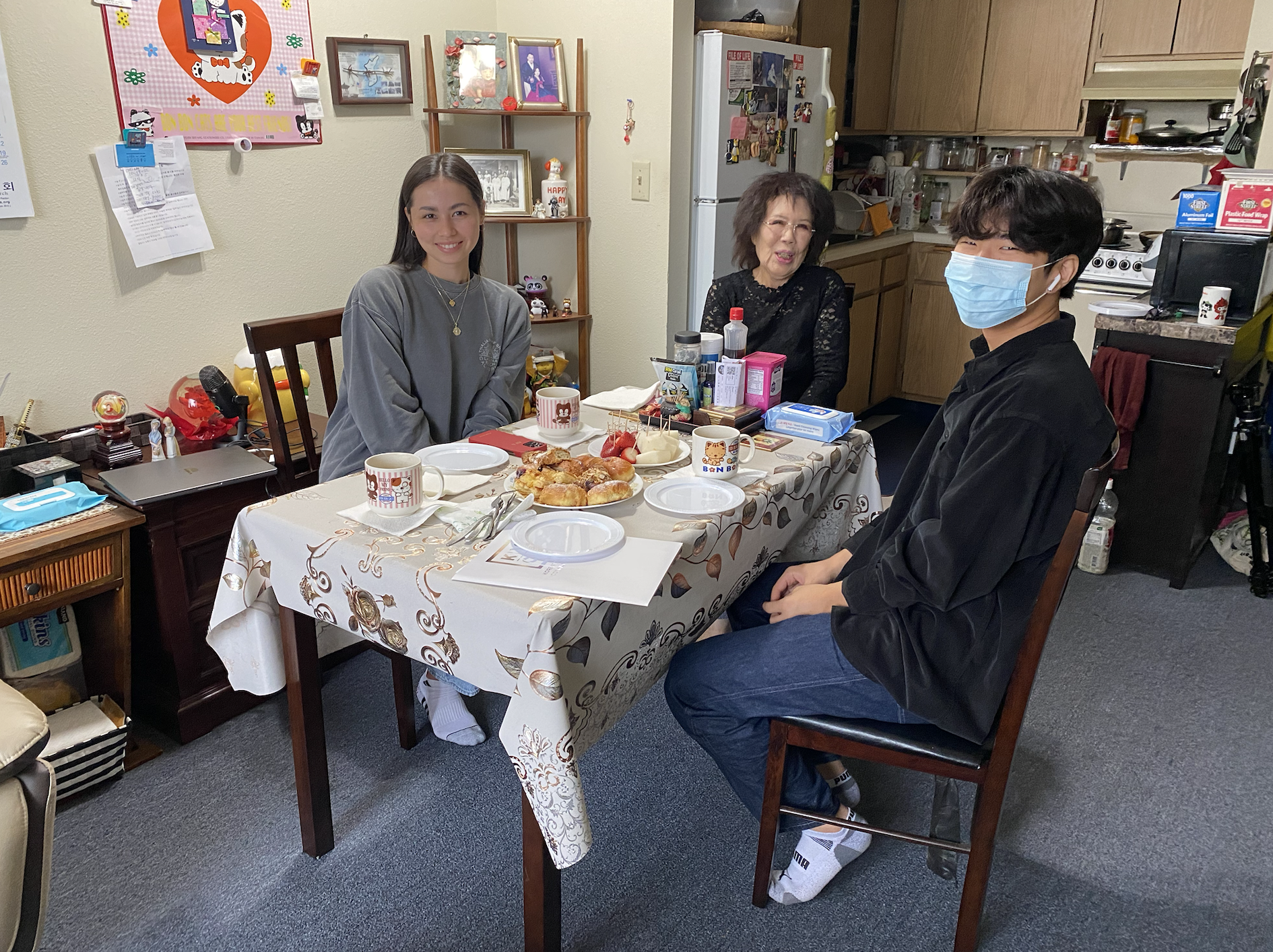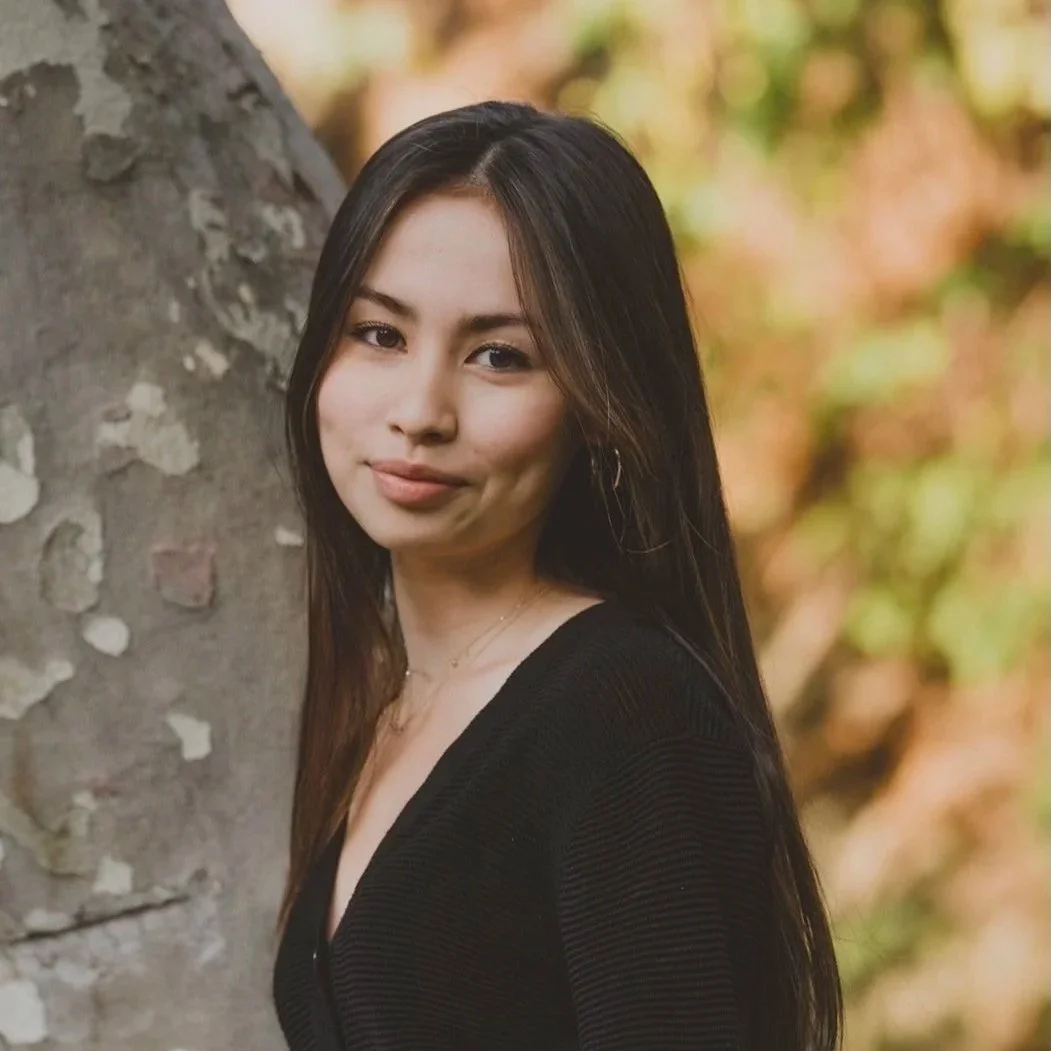
Ava McCollum
Ava is a junior at Marlborough School in Los Angeles. Passionate about literature and issues surrounding immigration, she found KYCC’s opportunities to be all-encompassing. She is the creator of the BOS Coalition, an organization to highlight the stories of people impacted either directly or indirectly by Asian immigration. The interview skills she acquired through the BOS Coalition will allow her to continue to expand her writing and journalistic abilities in KYCC’s program. She realized the true importance of listening to the stories of others and is excited to interview elders in the community to fully appreciate their instrumental contributions to our society and culture as a whole. As she attends a school in fairly close proximity to Koreatown, she wanted to explore its rich cultural history. As such, she looks forward to strengthening her interests through acts of storytelling and journalism. She plans on continuing her passion for English in college.
A Bundle of Sticks Is Hard To Break
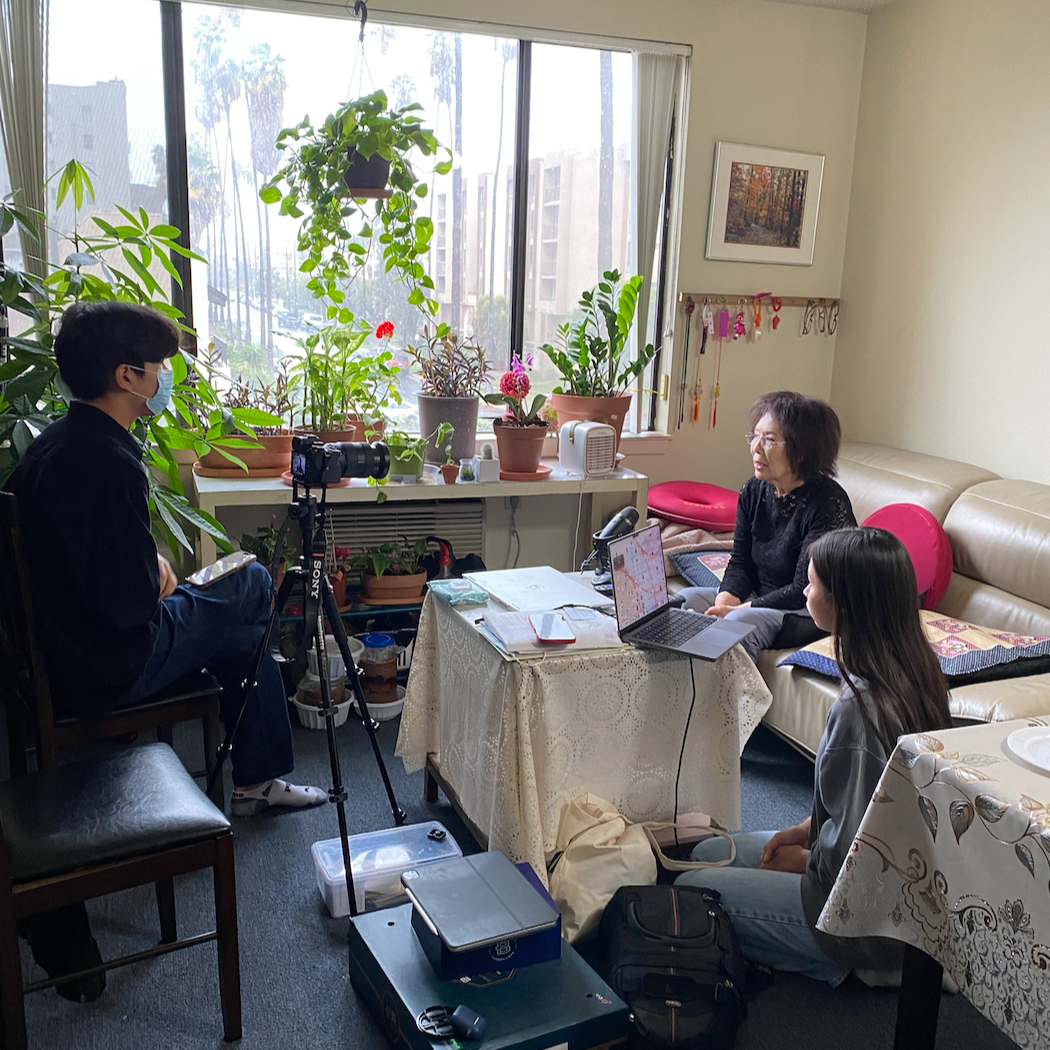
Interview by Kimberly Espinosa
Where is your hometown?
My hometown is Los Angeles. I go to school really close to Koreatown, so that’s kind of where my connection [to KSP] is. I’m a junior this year. I just started school on Monday, which has been a very strange adjustment considering the last year and a half has been online.
I was born in New York. I moved to Los Angeles because of my dad’s job when I was 9 years old, so I’ve been here for about eight years. That’s crazy! By the time I graduate high school, I will have spent half my life in New York and half my life in Los Angeles. But I feel like most of my personality and true identity have been formed in Los Angeles. Still, New York has definitely played a huge role in my life.
Do you have any memories of New York?
Oh, yeah. My best friend still lives there, and I actually just saw her because she came to visit. With COVID [lockdown], I hadn’t seen her in two years, so that was obviously awesome. I go back to New York pretty frequently to visit because my dad still does a lot of business there, and we also just go because we have a lot of friends there. Honestly, I personally prefer New York over Los Angeles. I’m not sure why. I’ve always felt this deep connection with New York, and I hope I can move back there. I formed my fundamental childhood memories there. I mean, if you asked me what my 5th birthday was like, I could probably tell you.
Are there any remarkable differences between New York and Koreatown or L.A.?
The biggest difference is the people. I feel like in New York, everyone is very blunt, very to the point, and sharp — I don’t know how else to describe it — but I feel like the environment is very different. There’s the hustle and bustle of New York. It’s very chaotic. You know, it’s known as the city that never sleeps, which is actually so true. You could be anywhere, and you will hear police cars driving down the street. That’s always how it is. I feel like in Los Angeles, it kind of depends on where you are, but it’s a lot more relaxed. The people tend to be a little less frantic. I guess you could talk about the weather, but I think for that, Los Angeles definitely takes the lead.
I really appreciate the lack of four seasons. It’s always nice to have the changing of the leaves in New York and the occasional snow. But no. In December, it’s freezing, and all my friends there are wearing like 20 layers, and I’m in Los Angeles wearing a tank top in November. I think that’s very nice. In terms of how it’s different from Koreatown and how it’s similar, I think New York is very, very diverse. It’s one of the most diverse cities, arguably, in the world.
When I was growing up, because my mom is Chinese, we spent a lot of time in Chinatown. We would go there every Sunday for dim sum (a traditional Chinese and Cantonese meal made up of small plates of dumplings and other dishes). We had such a connection with the people there. And I love having that kind of Asian culture in Koreatown because it reminds me of that. I know the cultures are not the same, but there are so many similarities between the two. I really appreciate that because it feels so one-sided in Los Angeles. Having a different culture to experience is always nice.
Have you been to Chinatown in Los Angeles?
I’ve been to Chinatown in San Francisco once. I know they’re famous for their Chinatown. I don’t think Chinatown in Los Angeles is very popular — actually, no, that’s not true. I have been to Chinatown before. Irvine and Orange County have a very big Chinese population. But I don’t know if that’s necessarily Chinatown. They just have a lot of Chinese culture there.
You said you go to a school near Koreatown. What other connections do you have to Koreatown besides that?
My mom is obsessed with Koreatown. She loves it because it makes her feel very tied to her Asian heritage since neither of her parents speaks much English. We go to Koreatown frequently. I think the very few times that she’s come to my school, she has always attempted to have a great time. I love the culture there. I love how [Koreatown] feels very separated from Los Angeles, if that makes sense. Everything just feels warmer there. Koreatown is a great place to escape from the regular vibe of Los Angeles. Having that place to go to is always nice. I drive through it pretty much every day, just based on my route to school and stuff. That’s the connection I have. I love Koreatown. I love the people and the environment.
Do you have a favorite place in Koreatown?
I’m obsessed with Korean food. Any restaurant, honestly, literally any restaurant. I’m a huge boba lover, and I know it is not from Korea, but Koreatown has the most diverse selection of foods, and I am a food lover at heart. Going to a place that has that huge variety or range of different types of food from other cultures is so awesome to see because you don’t see that in Los Angeles. That’s why a lot of my friends and I like to go to [Koreatown] because we like to experiment and try different things. Especially my mom; she loves going to the Korean food markets.
This year I’m taking Korean because I finished my Chinese course at my school. I really wanted to learn more about the culture and language. I think knowing another Asian language would be so cool. I took this class also because I know that I’m working with the Koreatown Storytelling Program, and I wanted to make sure that I was really [immersing] myself in Korean culture. So I picked up this course, and I can say “hello,” but that’s pretty much the end of my Korean-speaking abilities. I hope this year will allow me to expand my knowledge of Korean culture.
I know you attend school in another part of Los Angeles. Can you tell me more about that community and the school you attend? What is it like over there?
My school, to put it simply, is very cutthroat. The [school administrative staff] tries to be like, ‘Oh, we care so much about our students’ mental health.’ That’s not true. Don’t get me wrong, the teachers there are incredible. This year, I’m so lucky that I had the best teachers, but I feel like it’s definitely very intense. I’m sure when I go to college, I’m going to be very grateful for that, but obviously, as a junior, this is one of the most stressful years. I think it is probably the most stressful year, with the exception of the first semester of senior year.
Junior year is notoriously tough, and having a school that prioritizes education can make it even more difficult. I mean, all schools should prioritize education. I love that the community at my school is very tight-knit, and I’m grateful for that because I think in schools where education is so rigorous, having people who understand what you’re going through is really nice.
My school also does an excellent job at making sure that everyone’s included. They made significant progress within the history department, making sure that a lot of different perspectives were being accounted for. They really took into consideration the students’ requests for representation because we are actually a pretty diverse school. So it makes it easier to ask for help in that sense because they are pretty accepting, and they want to see their students do well, which I appreciate.
With the cutthroat program, everyone’s kind of on their own. People don’t talk about their struggles at my school. That’s one thing I wish we focused more on. But I love my school and wouldn’t choose to go to a different one. I love all my teachers. I love my friends, and I think I’ll be really appreciative of all the things that they’ve given me by the time I get to college. Now, it’s hard when I feel like the workload is crushing me in the first week of school, but I know I’ll be grateful for everything that they’ve given me by the time I go to college.
How is it being back in person for school after virtual learning during quarantine?
I’m so grateful that I’m back, and I know I’ll complain so much about how online school is so much easier and how it was a breeze just walking through the 10th grade, but I am so grateful to be back in school. I think my mental health, even in the first week of school, shows the biggest difference in my mood. I’m so much happier. I didn’t realize how much I missed it until I came back. I feel like I’m paying so much more attention in my classes. Last year, it was so difficult to pay attention; you had [constant] access to your phone and different tabs on your computer.
This year, I’m really trying to make an effort to take advantage of it because I just realized how lucky I was to be in school and be able to see my friends on a daily basis — not having that social interaction played the biggest role in my mental health. It makes such a difference when you can be around all your friends and the teachers. When I have a question in class, I don’t need to be like, “Hi, I hope you’re doing well,” sending an email just to ask a simple question.
Being in person is just so much better. I’m sure in November I’ll absolutely dread being in person because of all the work, but I think it’s so awesome to be back. I’m glad because I don’t know what I would have done with another year online. I hope that nothing catastrophic happens, and they’re like, ‘Oh, go back home. Go back to online school.’ I don’t know what I would do. I need to find some wood to knock on because if that happens, I’ll be so sad.
What’s the protocol at your school for COVID?
Well, everyone wears a mask. Schools are requiring vaccination. We have to get tested pretty regularly, like twice a week. But I’m vaccinated and haven’t had to get tested. Someone told me that if you’re vaccinated, you don’t need to get tested, but I honestly don’t know what the protocol is. I think they’re very tight on the rules.
Do you have other things going on besides academics, like after-school extracurriculars or hobbies?
I’m on the tennis team at my school. When I moved [to Los Angeles], I started playing tennis, and my family is very hardcore. My brother is like the top [school tennis player] in the country. But we were a very tennis-oriented family. I have played on the varsity team since freshman year, and that has also been a source of great connection in my life. I can’t even tell you how close our team was. It was honestly so awesome, and I was able to build so many connections with people of different grades. Having people who were seniors and juniors guide me through high school was also really nice because I still keep in contact with a lot of them. I’ve been so lucky to have people who have gone through the rigorous curriculum and helped me with it. They’ve contributed so much to my life, and I feel they’ve given me a lot of resources that have been so helpful.
Tennis is definitely my most present extracurricular activity. I honestly don’t play as much as I used to, with junior year and everything else I have going on, like the ACTs and schoolwork. Education and school in general are just my main priorities right now. I also have the BOS Coalition thing that I started, which has also taken up a lot of time. I’m really happy with it and the direction it’s going in, but it’s definitely time-consuming. I’m part of a lot of different groups at my school. I guess that’s still kind of academic-oriented, but it also takes up time outside of school.
Can you tell me more about the BOS Coalition and your role in it?
In the second semester of my sophomore year, I took a contemporary East Asian studies class, and my favorite teacher taught it. I have it again this year, so I’m super excited about that. We did a project at the end of the year, and it was a cumulative creative direction. You could choose what you want to do with it. I started this organization called BOS Coalition. It stands for “Bundle of Sticks,” which I named based on an Aesop fable of the same name. Basically, the moral of that story was that one stick is easy to break, but if you have a bundle of them, it’s much harder.
That resonated with me because it’s a similar approach that I wanted to take in terms of societies. I think, as a society, we saw a lot of division last year. I wanted to do something that related not only to me personally but also to more global problems. I wanted to do something that incorporated what I love, and obviously, it had to do with my school as well. So what I focused on was getting the stories of immigrants, or people who have been impacted by Asian immigration, specifically because it’s my heritage, and I love to learn about Asian culture.
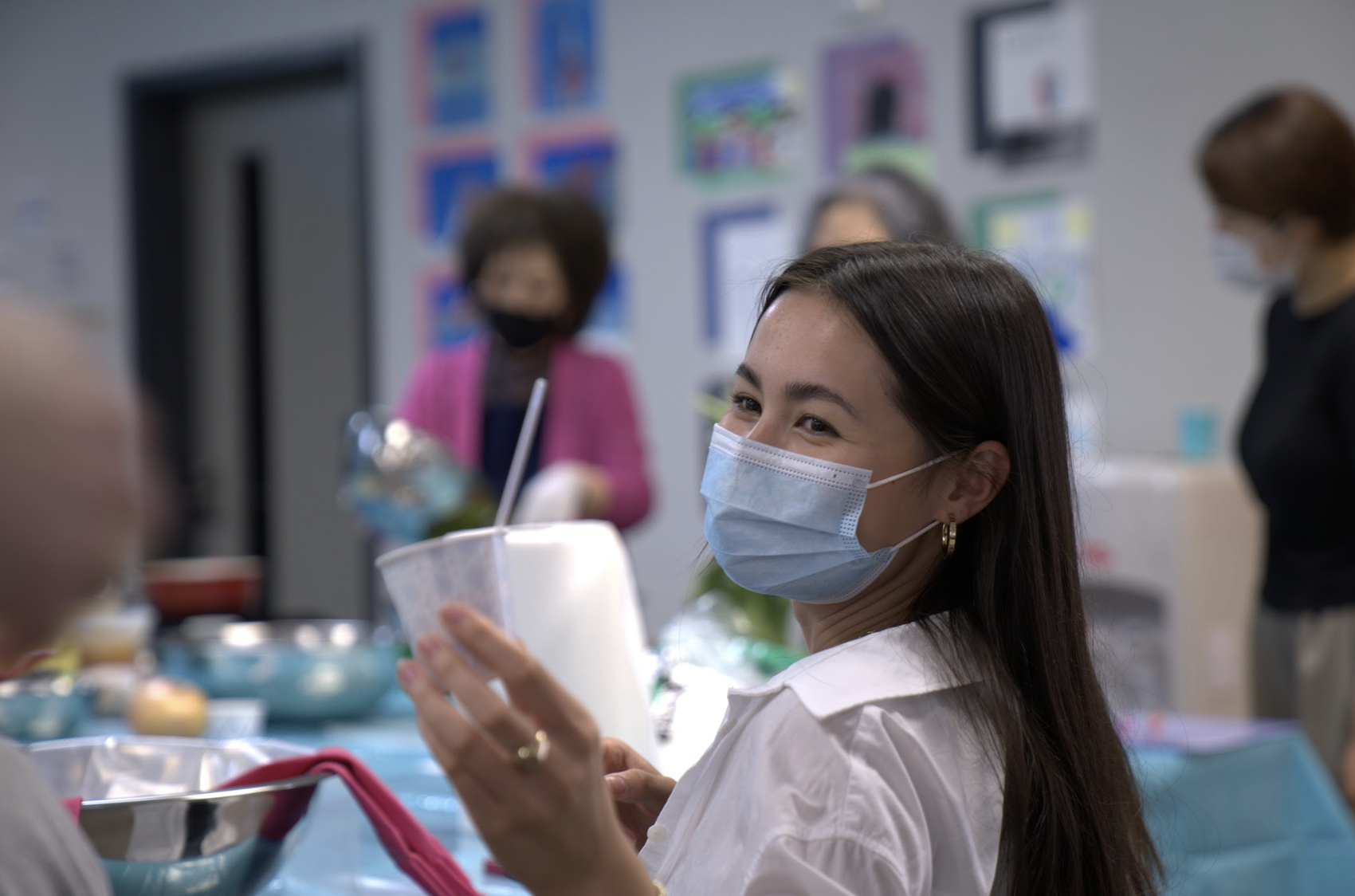
I interview children of immigrants or immigrants themselves who have made a name in any industry or who have been successful in their fields. I like to capture their story of how immigration has impacted their life and career. It’s been great because I’ve been able to [gain] a lot of interview experience. I’ve built connections with a lot of different people from so many different walks of life, which I think is the most rewarding part of it.
Recently, I interviewed someone who worked on storyboarding for the cartoon and animation industries. He worked on a “Powerpuff Girls” reboot, which is so cool. Without that [project], I would have never been able to meet those people. I’ve met so many super influential figures, like female entrepreneurs who have created huge beauty lines and who’ve made headlines in the entertainment industry. It’s been cool to see people who have had these really extensive stories and made impactful movements within their field. It was supposed to be a project for the end of the year, but I really enjoyed it, so I just continued it. I’ve been reaching out to a lot of different writers and movie producers, as well as a lot of interesting people in the culinary industry.
What is it like to reach out to these people? I know you already talked briefly about them, but I’m really curious in terms of how you even found out about them. Was it through mutual connections, or did you know about them before? Do you have anyone supporting you in this process?
I have a lot of supportive people in my life. My teacher has been super helpful and very supportive of the whole thing. I’m around so many people who have been impacted by Asian immigration, like my mom, who is an immigrant. Her parents also live in the United States, but everyone else is abroad. I started by interviewing family members and close friends. And then I reached out to other people by going on Instagram and looking at people who are successful in their fields and have been affected by Asian immigration. I’ve had a couple of people whom I already knew ahead of time, like my first interviewee, a man named Pichet Ong. He is a really successful chef, and he’s got all these great recipes. My mom knew him through a mutual friend, so he was generous enough to be my first “experiment.”
I direct-messaged (DM’d) so many people on Instagram. Without social media, I would have never been able to do this. I love social media, but I hate it as well because it’s the root of all insecurities, and it promotes an unrealistic standard. Having social media to reach out to people has been so important. I usually DM about 15 people a week, and then I’ll usually get a couple of responses here and there. It’s interesting because you can DM these people, and they’ll be like, ‘Of course, I’d love to help,’ and then that’ll be their last response, and you’ll never hear from them again.
It’s interesting to see how certain people handle those situations, but it’s been great to get so many perspectives from people of very different cultures. I’m working on representing smaller Asian countries because I know there are so many [stories] about Korean and Chinese people. But there are so many smaller Asian countries that I’d love to focus on. I’m just working on being inclusive and representative of different types of people. Instagram and emailing have helped me a lot in that process.
It takes a lot of initiative and energy to get people to join you in your project. I’m so glad that things are working out for you. Do you think you will continue to do this in the long run, or are you just seeing where things go?
I definitely want to continue it. I took a little break just to get everything started with school. But just a couple of days ago, I started reaching out to a lot more people. So I’ve got a couple more products coming along. I’m really interested in storytelling, writing, and listening to stories, and I could see that being a future career path [of mine]. I don’t know if that would surround the BOS Coalition, but I’m super into journalism. I love writing, history, learning about new cultures, and learning languages, so it’s a great way to combine all of my interests. I could totally see myself in the future going into a career in writing and storytelling.
Is there anything else you’d like to share with us? Are you reading or watching anything interesting these days?
I’m really glad I found KSP. I learned about it through one of my teachers. I think I would have learned about it from someone who previously participated, but I’m super excited to be a part of this. In terms of anything I’m reading and watching, I used to read so much, and then throughout middle and high school, that kind of died down a little bit. But I started reading so much more this summer, and I’ve really enjoyed it because I’ve spent so much of my time online. It’s been nice to separate myself from that through reading.