Jina Kang
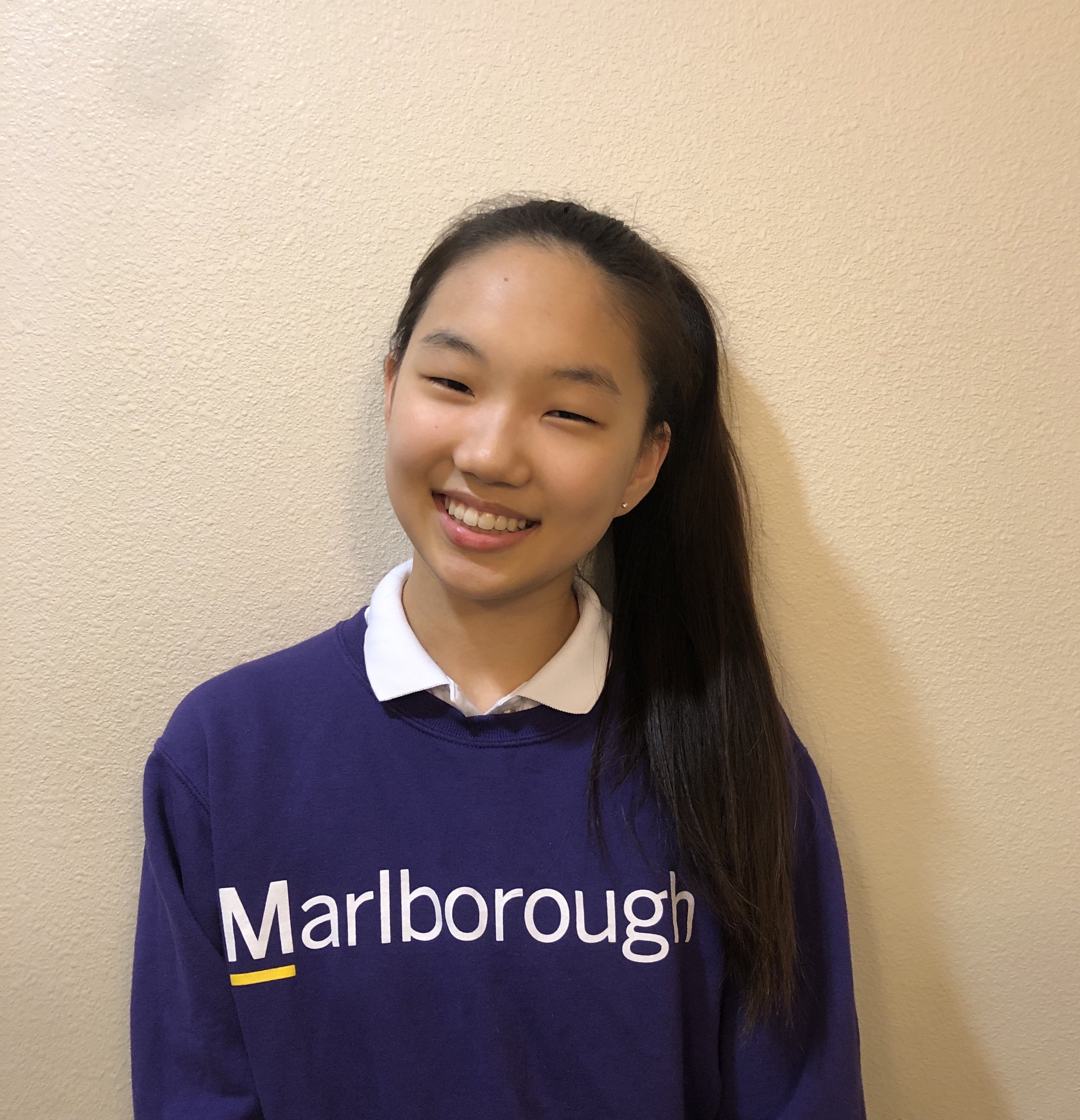
Jina is a junior at Marlborough School. Having lived in Koreatown since she was 5, she has learned to truly appreciate the amazing community, from the prospering culture to the wonderful elder community. She is so excited to share the stories of elders through documented history and to let them know that there are always people willing to listen. Having honed her interviewing skills through her school newspaper and at a club called Rise High Tutoring, which she co-founded, Jina looks forward to exploring her passion for writing and storytelling even further. She is a devout member of her school’s debate club and loves to dance ballet, which she has done since she was 5. Although unsure about the school that she wants to attend, she plans to major in economics and political science and ultimately wants to attend law school.
My Body to the Music
Interview by Katherine Yungmee Kim
Where is your hometown?
I was born and raised [in Koreatown]. I live with my mom, my dad, and my sister. Koreatown is the most communal place I’ve ever been. There’s this culture, a very important part of Korean culture, within Koreatown that has this idea of a relationship with our elders. In Korea, we refer to [female] elders as halmoni (할머니 — grandmother) even though they’re not our grandma, or omma (엄마 — mother), even if they’re not our mom. That is what makes Koreatown such a special place to me. It’s not Korea, but it very closely resembles Korea. Whenever I go to a restaurant, [the people there] recognize and refer to me or treat me like their daughter. I can name so many restaurants where I’m close with the owners and the people who work there because of this shared experience of being Korean. That is so important and vibrant within Korean culture and something I’m really, really proud of.
There are a lot of moving parts in Koreatown. It’s a very chaotic place. That’s the beauty of it. It’s not very predictable — you never know what restaurants or new stores have come up. But I think it’s wonderful to be in this ever-changing place. Every time I come back to it, it just improves. I can attest to that because I went away for a few months. Every time I come back to Koreatown, it’s always new and yet always the same. It feels like I’m coming back home. I love the fact that it’s constantly improving. Koreatown is a very special place to me.
What changes have you noticed since you went away?
The saddest thing is that many restaurant owners are no longer running their businesses. It has less to do with the time I’ve been gone and more to do with the pandemic. Many small businesses have ended up falling apart for economic reasons. I see firsthand the shift — and I think this is a global shift — to electronic forms of service. The classic server interpersonal relationships no longer exist. That is a little bit sad because that experience was so crucial to my childhood. Now, there are a lot of mobile orders. Even when you’re in a restaurant, they have these little tablets that you can order from. Obviously, that is great because we’re making huge technological advancements, even within Koreatown. At the same time, it deprives the community of some of those [intimate] qualities.
What is a restaurant that you used to go to that no longer exists?
Gosh, I’m blanking on the name. It’s called Ppong now. Before, it was a little snack bar that was very important to me because my family, or my mom and I, would always go after school for the perfect snack to eat before dinner. It served on-the-go Korean food, like premade gimbap (김밥 — Korean seaweed rice roll) and tteokbokki (떡볶이 — spicy rice cakes) — the classics you see in a Korean drama.
Another place I frequented still exists, thankfully. But now they’ve switched entirely from an in-store restaurant experience to mobile and delivery orders only. Many of these stores haven’t intentionally turned into delivery services. That’s also unfortunate because I grew up getting to know the owners and eating there in person, but we only get takeout now.
What’s your favorite place in Koreatown?
My favorite place is the Madang Courtyard. I’ve made so many memories there. I’ve taken every non-Korean friend to introduce them to Madang because it truly resembles Korean culture, all within this little plaza. It has everything you need. It has restaurants, dessert places, K-pop stores, used books, clothing stores, and coffee shops. It is Korean culture centered around this one cultural hub.
It was always my go-to place. It was also where I had my first job. I started working at Sul & Beans in the summer of my junior year. It was my first experience working, and it was just so chaotic. It’s one of Koreatown’s hotspots, and the line would circle the entire building. That experience opened different doors for me, like being comfortable working in food service in general and interacting with customers. Every time I go there, I have a physical reaction. It’s taught me so much, is so memorable, and is something I always think about.
I’ve been in Koreatown long enough to see everything that’s changed. There are so many stores that have left and so many that have come out. Every time you visit, there’s a new restaurant, cafe, or something like that. It is like a little representation of Koreatown and Korea, and that’s what I love the most about it.
Were your parents born in Korea? When did they come to the U.S.?
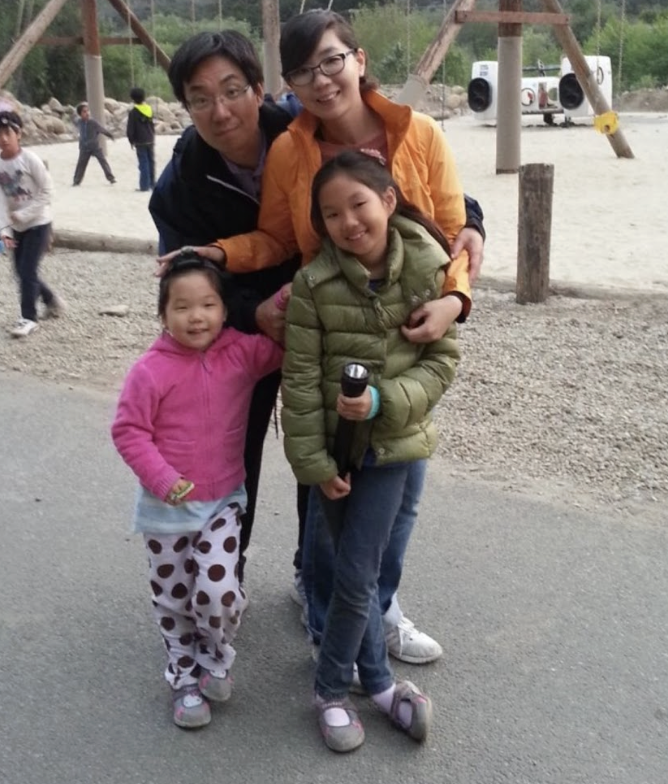
Both of my parents were born in Korea. They were fifth-grade classmates, which is adorable. My dad immigrated to Northridge with his family a little bit earlier than when my mom [came to the U.S.], around the 1990s. My dad brought my mom over in 2001 when they got married. My mom came here alone without her family, and my dad’s whole family was already here. That’s pretty much how they came here. We stayed in Northridge for my first few years of life and moved to Koreatown in 2010. Now, my mom’s side of the family lives in Korea, and my dad’s side of the family still lives in Northridge.
Tell me a little bit about your dance evolution.
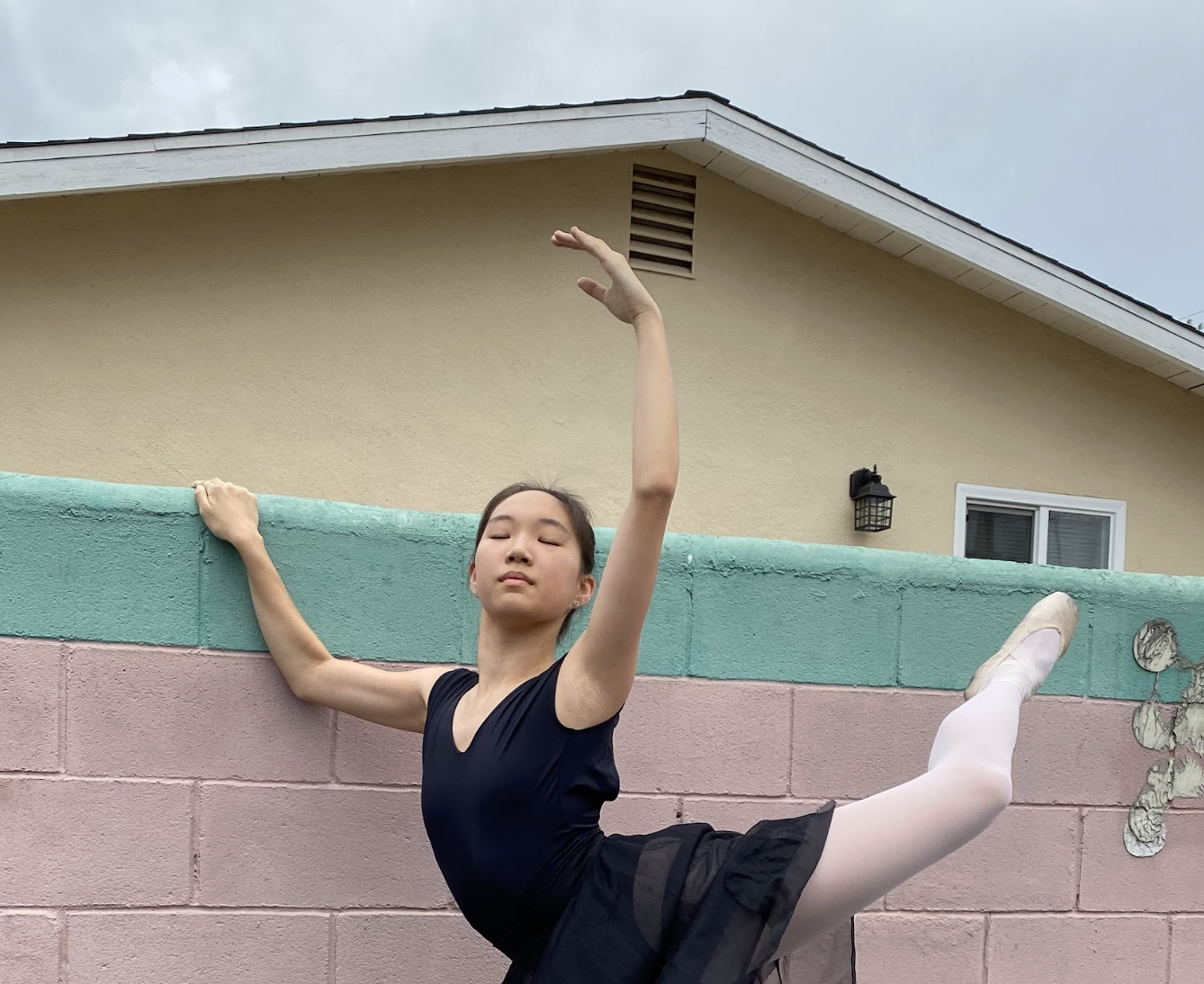
From the age of 4 to high school, I grew up going to a studio called the Marat Daukayev School of Ballet, an amazing Russian ballet school that was very Vaganova-centered. I grew up strictly doing ballet. However, once I got into college, I ended up trying out a variety of different dance forms. That was super exciting. I took a semester off from ballet in my first semester of college because I thought maybe I could do something else and try out new activities. But then I forgot how important and integral ballet was to me, my personality, and my daily life, so this semester, I’m very much involved in it again. I’ve been trying out a variety of other dance forms and am having so much fun with them.
This semester, I explored contemporary dance; it was something that I was always interested in. I joined a student choreography coalition where students get to choreograph their dance pieces; it’s a lot more liberating than the technical ballet I was so used to. I was able to try out contemporary, and we [had the opportunity to host] guest speakers and guest dancers who taught us modern, jazz, and tap. I was able to try out a bit of all of them, but I mostly mixed them all together. So I explored this type of dance, which isn’t one thing or another but is like a fusion of all these different types, which I think is the most interesting.
I asked you to create a dance narrative because I knew you were a ballerina. You choreographed a piece around the murder of Latasha Harlins. What did you know about the incident before KSP? What was your process like?
I grew up learning about the L.A. riots through facts and stories, but I never had a personal connection to them because my parents immigrated shortly after 1992. While it was discussed in regard to my Korean heritage, there was no way for me to experience or talk about it firsthand. When I learned about the death of Latasha Harlins, I was shocked that she was a mere 15-year-old. I was around that age when I choreographed the piece.
The first time I performed it, I felt so raw and like something that I’m not sure what the word is … it was something I empathized with immediately. It was terrifying that someone so young [was murdered] simply because of her race. While choreographing this piece, I didn’t have much experience choreographing non-ballet pieces. I had a strict set of plans; I had this move after this move after this move. I had a whole layout of that.
As soon as I got to the location, I heard the music for the first time. It was “Halo” by Beyoncé. All of a sudden, most of that layout completely disappeared. It was just my body to the music. One thing I remember vividly is that a lot of the dance ended up becoming improvisation. I got so emotional that I suddenly started creating movements that I didn’t even imagine I would end up expressing through the music. To me, that felt more original than anything I would have created or choreographed prior to dancing there. It was even more meaningful that we were dancing at a location so close to Latasha Harlin’s death.
The [1992 civil unrest] hasn’t come up that much for me since, which I think is unfortunate. It’s definitely something that’s so rooted and integral within Koreatown. Those [protests] did very closely resemble the Black Lives Matter movement, which is very vivid to me. One emotion that I remember feeling when reading about Latasha Harlins was shame. I’m someone who’s very proud of my Korean culture, traditions, and the ability of so many Koreans to emigrate from Korea and create businesses and a lifestyle within Koreatown. But the shame that I felt when reading about what happened to Latasha Harlins is similar to the shame that I experienced during the Black Lives Matter movement about us as a community. It is something that I want to revisit, but I haven’t had the opportunity to do it since I left.
When our K-Town students leave California for college, they have said the adjustment is really hard. Can you tell me a little bit about your experience?
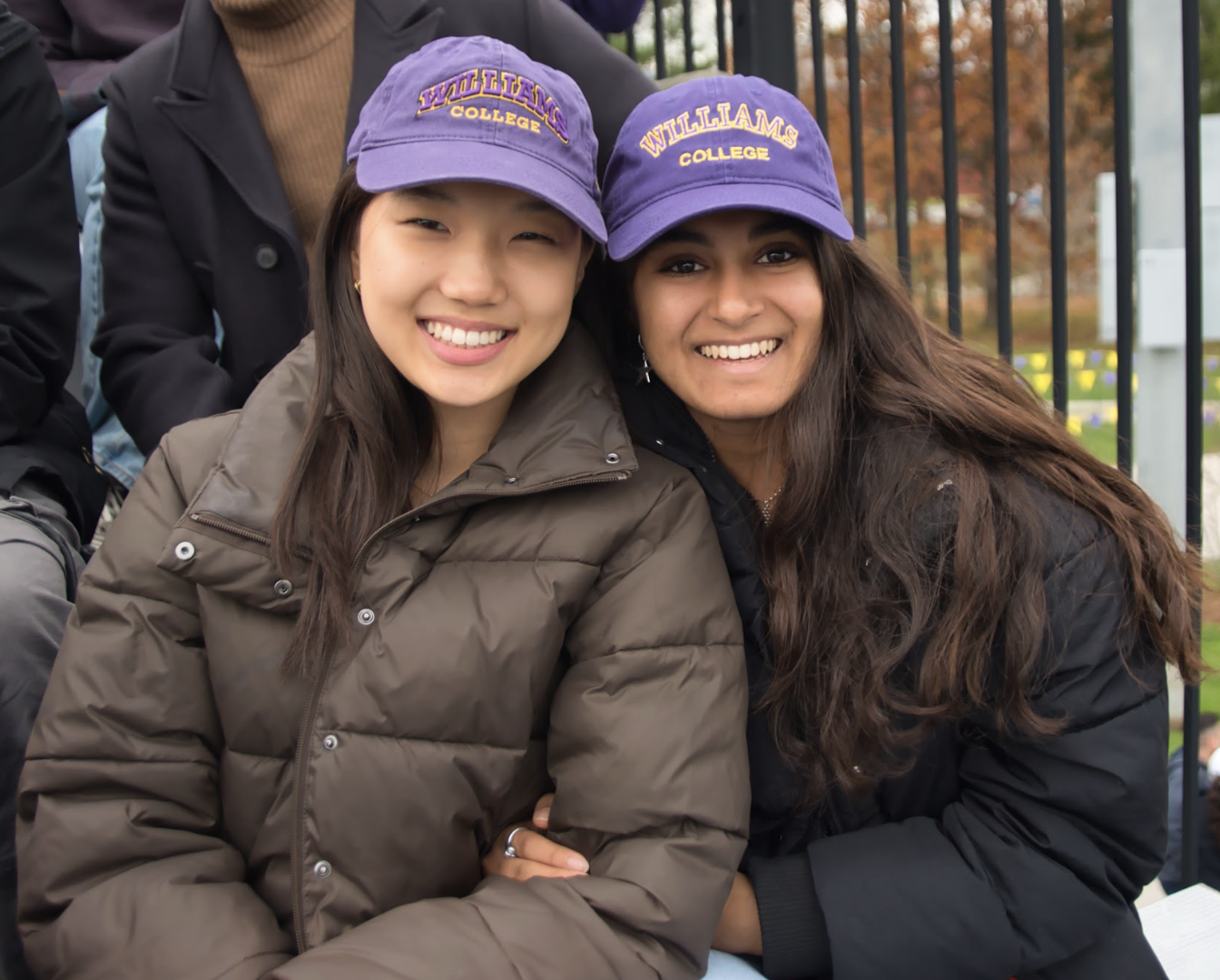
I was used to it. It wasn’t that much of a shift for me because growing up [at Marlborough School, a private girls’ school], I was surrounded by non-Asian people more than I was Asian people. That taught me how to build relationships early on in settings that I’m not super comfortable with. That was something that translated over at Williams College. However, the lack of culture was a bit of a shock to me, regardless of my friend group. During my time in Koreatown, I was surrounded by hundreds of restaurants and Korean faces and by this cultural richness that wasn’t at Williams. Williams is super isolated.
I learned to appreciate Korean culture a lot more when I came back. It made me look for Korean food and Korean experiences. I wanted to go to the Korean theater rather than the American one, shop at Korean stores, and try out different Korean restaurants. That is something that I didn’t appreciate beforehand, something I took for granted. Being able to enrich myself now, I remind myself that there is still time to learn a lot more about my city and my hometown. There is so much I’ve missed out on.
I don’t ever feel like Williams lacks anything; it’s an experience in itself to be entirely away from someplace and from people I’m comfortable with. Having both experiences and being able to come back to L.A. is a luxury in itself. Being able to make those switches back and forth is something I appreciate but also want to take advantage of.