

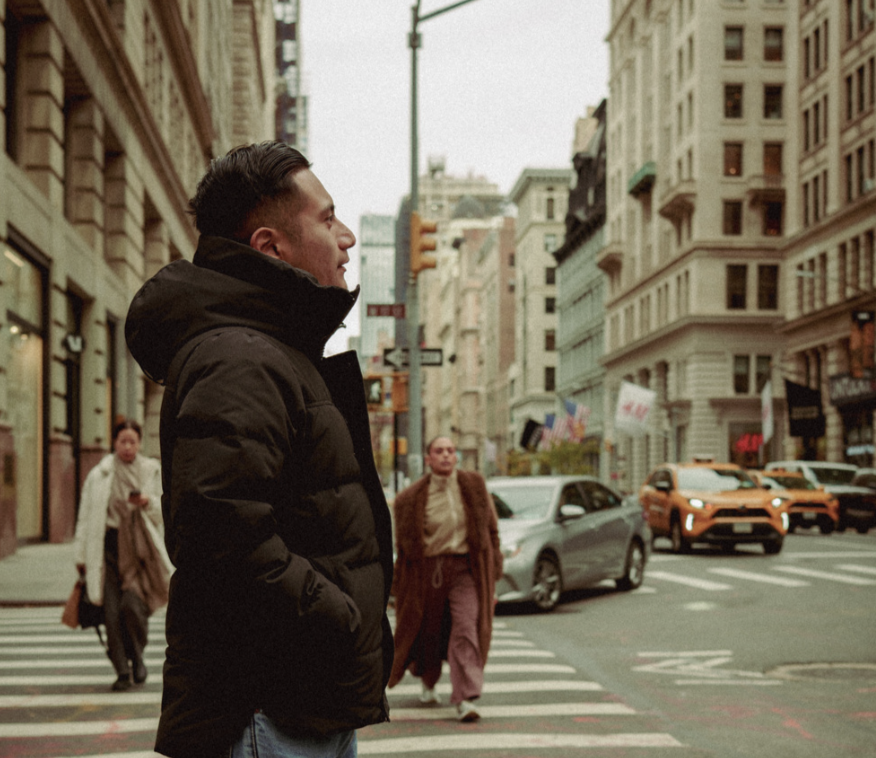
Joey Gutierrez*
Joey is a 31-year-old Mexican American man who was born and raised in Koreatown. He was introduced to substances at 13, beginning a long, tumultuous journey that he describes in this interview. Through his struggles with addiction, gang violence, and the justice system, Tony unveils his highly personal narrative about his road to recovery and reconnection with religion in that process.
*Due to the sensitive nature of his interview, Joey has elected to remain anonymous
Angels, They Exist
Interview by Dilan Askew and Lauren Gilbert
Please tell us your name, your age, and where you were born.
Hello, my name is Joey Gutierrez. I am 31 years old. I was born and raised in central Los Angeles in Koreatown.
How do you identify?
I guess he/him. I don’t know how to answer that question, but I consider myself Mexican American. Both of my parents are from Mexico. They’re from [Mexico City] and Oaxaca.
What would you consider to be your hometown?
I consider Koreatown to be my hometown. But I had different [hometown] experiences [growing up].
What is your favorite place?
I don’t really go anywhere. I’m usually just at my house, on the street, or at the park. The park [Seoul International Park] is the best place — the one on Normandie Avenue and Olympic Boulevard.
Can you tell us a little about your family when you were growing up?
I was raised by a single mother of three. I have an older brother and a younger sister. I’m the middle child. My dad was around, but he didn’t spend much time at home.
Are you close to your family?
Yes, with my siblings and my mom.
What are some of your childhood memories?
I remember liking animals growing up. I used to like having pets. My dad gave my dog away. I think his name was Cookie. I was sad for a moment, but eventually I got over it. I still haven’t asked him why he did that. As a child, I wanted to be a veterinarian or a firefighter.
Koreatown is known for a lot of car crashes. I remember one time I was walking to school when I got run over [while riding] my bike. It happened in the blink of an eye. I [remember] being under the car and getting pulled out from underneath it. Thankfully, I just had a few scratches and bruises. Another thing I remember is one time I was walking to elementary school in the morning. I was by myself, and I remember getting to the light, and it was about to change. I thought I saw it turn green, but I had a hoodie on.
When I was getting ready to cross, I took about two steps. But then I felt pressure in my chest, like something holding me back from crossing. Still looking down, I [noticed] a bus passing by. I would have probably gotten hit by that bus. When the bus passed, I looked up, and the light was red. I got back on the sidewalk but didn’t understand what happened at that moment. I guess now I do. If you guys believe in the angels, they exist. I felt like that was my guardian angel watching over me.
While in third grade, I had the privilege to go to Mexico. I was 8 years old, and I went to Mexico for about a year. For the first six months, I went to school in [Mexico City]. I remember being in the after-school class. They put me in an English class, and the teacher would have me translate words into English because the kids knew that I was from L.A. The teacher would ask me, ‘How do you pronounce this?’ I’d tell them, and then the kids would follow along. That was a good experience.
For the remainder of the six months, I went to Oaxaca, where my family’s from. I was able to work in the fields with my family. It was a good experience. When I came back from Mexico, they put me into ESL to start my English again. I enjoyed being in Mexico as a child.
Did your parents go with you to Mexico?
They went with me. When I came back to the [United States], they stayed behind. It was just my brother and me living at my aunt’s house. We were there for a bit, like two or three months, before my mom came. My dad came a year or two later.
What high school did you go to?
I went to Los Angeles High for a little bit, but most of my time was spent in the juvenile system.
Do you have any favorite memories of Koreatown or from your childhood?
I can’t remember much. My mom was limited in English. My dad wasn’t really at home. We wouldn’t do much [together]. I’d just go to school and come back home. I remember my mom would take us to church on the weekends. That’s about it. [My childhood] was pretty simple.
When and how was your first experience with substances?
My first experience [with substances] was when I was about 12 years old. When I was in seventh grade, before I started smoking, I was drinking beer. Then I started smoking weed with some of my friends from school or people from the neighborhood. I eventually got introduced to crystal meth and started smoking that when I was 13.
What was your first experience getting high?
Everything started back in sixth grade when I was going to school with my brother. He was in the eighth grade. He was getting into fights after school and hanging out with some of the guys from school who were gang-affiliated. That’s around the time I started hanging out with eighth graders as a sixth grader. They would look out for me because I was a little brother.
I kind of started liking that vibe. I started stealing from stores, coming up on gum candies, and I’d sell them at school. I would see substances around all the time. It just never really caught my attention. I only wondered what they were smoking in the glass pipe because they’d blow out so much smoke.
One time, I walked into a room, and there was a group of people smoking and getting high. Since I had drunk a few beers, I was kind of buzzed. I told the guy who was smoking that I wanted to try it. They let me hit the pipe. That’s when it began. I started to get high.
Did you like it or not?
In the beginning, I couldn’t understand the feeling. I just knew that I would be awake, and I wasn’t very hungry. But then, little by little, I started liking the feeling of it. Every time I’d see people [smoke crystal meth], I would want to hit [the pipe] too. Then it became a habit. I didn’t have to go out of my way to get it.
Were the people who introduced you to substances around your age?
They were a bit older. I was 13, and they were around 16 to 18.
Were there adults in your life who noticed your substance use?
Not really. My mom and my dad separated when I was around 11. There was always domestic violence in my house, and I guess my mom had had enough of it when I was in my teens. We ended up moving out. My mom moved into my uncle’s house, her brother’s home.
I didn’t have much supervision from my mom. She was busy trying to work little jobs here and there, trying to make ends meet. I was always out and about. I had a lot of free time on my hands. I’d hang out with these guys who liked to party and do drugs, and then there were girls and stuff. That kind of attracted my attention, so I started doing it more often. I was doing whatever I wanted.
Were you going to school?
When I was in sixth grade, I was going to school with my brother. I remember seeing him hanging out with some of the guys at school. They were gang-affiliated. I knew they were gang-affiliated because we also have family members who are. My brother got expelled for bringing a firearm to school and ended up at a community school, where he finished up high school.
[My parents] sent me to the local middle school. That’s when I started meeting more neighborhood kids. That’s when things started to get bad. When my mom would go out to do laundry and stuff, I would go with her, but I would always wander around. It was there in seventh grade that I met some of the neighborhood kids, and we started ditching and going to kickbacks, drinking beer, smoking weed, and just partying. That went on through eighth grade, and it became a [daily habit].
Eventually, I ended up joining the local gang in the neighborhood where I was living. I would just hang out with the older guys after that. When I got initiated into the neighborhood, I got jumped. I remember I went home with a purple eye and bruises on my body. My mom asked me what had happened, and I said I had fallen. But I was proud of it. I went to school all happy that I was official. Looking back, I can’t imagine somebody so young doing those things and getting high.
What do you think about the older folks in your life who either gave you or introduced you to substances?
Looking back at that time, I don’t think much of it. I guess at the moment, it was just to have a good time. That’s the way I was. They were the homies, my friends. Substances were always there, and I always had access to them. But I know I wouldn’t do that to the younger generation because I know what it’s like.
When you were using substances, what headspace were you in?
I was enjoying it at the moment. I was just getting to do whatever I wanted. Since my mom was the only one at home, I’d lie to her every time I came home late, or, if it was [a day off or holiday], I’d say that we still had school that day. She wouldn’t know that we didn’t have classes that day, and I’d go and hang out with my friends. I would lie my way out and just continue being out on the streets.
I remember one time I saw an older friend of mine. He was sitting by some stairs, and he was smoking what looked like a joint, and I told him to let me hit it. I thought it was weed, but it was a joint laced with crack cocaine. He gave me a hit, and I liked that feeling instantly. At that moment, I thought, Damn, this is for me. I just wanted to feel that high, the feeling of that first blast, as they call it.
Soon enough, I went from smoking weed to smoking crack. I’d hang out with the local dealers and stick around with them so they could hook it up with a piece of crack. I’d see how they would smoke it with a straight shooter — they call it a glass pipe.
When was the first time that you realized you had a substance use problem?
It wasn’t until I got older, maybe when I was 23 or 24. I got out of prison, and I was trying to get my life together, trying to do things right for my family and me. Somehow, I ended up going back to the same thing — the street life, partying, hanging out, and getting high. I tried to stop and couldn’t. I’d be staying out for two or three days, then just rest, wake up, and go back to the same thing. That’s when I knew that I had a problem. I couldn’t stop. I knew that I had to do something about it.
Can you tell me more about being incarcerated and what role substances played?
When I was 14, I got arrested and became involved with the justice system. [The police] arrested me for possession of a firearm, and I went to juvenile hall. I was there for a few months until they let me go on house arrest. I was on house arrest for two weeks, but I got a violation because I kept going out to hang out and get high.
I was at the placement facility for almost two months before I got a home pass to visit my family. But on the same day, I got arrested again. There was a thing called the gang junction, where the LAPD enforces certain areas that gang members cannot hang out in and people they can’t hang out with. But I was hanging out with the homies in a car.
I’d violated my probation, so they sent me back to [the juvenile hall on Eastlake Avenue], and they tried to send me to another placement home, but I didn’t like it because I felt like they were treating me unfairly. So I ended up going AWOL. I escaped from that placement, and I was back on the streets. At that time, I wasn’t going home. I was just on the streets hanging out with my friends and getting high.
Eventually, I got arrested again, and they sent me to a juvenile camp. They gave me six months, but since I kept getting into trouble there, I extended my time, and it went from six months to 19 months. I ended up getting out when I was 16. During that time, I was going to a community school and trying to finish high school.
Again, I started just hanging out with the same people. Most of the people I hung out with all liked to get high, not all the time, but they used to party, and drugs were always there. Then I kind of stopped going to school and stopped reporting to my [probation officer]. I violated probation again after six months, and I went back to juvenile hall. They gave me six months of camp again, but I got caught smoking weed during my first two months there. My probation officer said to send me back to court with a referral for rehab.
The judge granted the referral. They picked me up from the court and took me to rehab. But I knew that I wasn’t going to last in that rehab because I was going to be getting into trouble and eventually get sent back to court and then camp. I felt most of the time that I’d get in trouble just because of my gang affiliation or the gang that I belonged to.
I escaped from that rehab facility. I was on the run for about two months and got arrested again. They sent me to camp again, and I ended up getting my time extended to 14 months. I was finally released at 18. Since I got released after I turned 18, I was off probation. It was like a fresh start. I got my high school diploma and started working here and there. There were a few hustles that I also started. A little while later, I started going back to the same thing — hanging out, partying, and being in the same environment. I started to get high again and was smoking crystal meth and stuff. It just started all over again.
What do you think about the youth justice system, especially looking back as an adult?
[The justice system] didn’t help me much. I feel like there should have been new, different rules. Extending my time wasn’t helping. It was just making me worse. I felt like I was going crazy and that I was never going to get out. I even lost hope, so I didn’t care. It’s unfair. They don’t hear people out. They just give you [a sentence] — whatever they feel like giving you — instead of hearing [you out].
The first time that I went to juvenile hall, I did 19 months before I was finally released. I was so happy because I would dream about that day, but every time I dreamed about that day, I’d wake up and be like, Damn, I still have this much time to go. Finally, the day came that I was released. I got released from court. That was one of the happiest days of my life. But I wasted so much time, so much of my life [in juvenile hall], just getting more time, more time, more time that I spent most of my teenage years there.
After trying to quit substances when you were released, how did you eventually slip back into substance use?
Hanging out with the same friends, same people, same crowd. I felt like things that had happened in the past were catching up to me in the way that I wasn’t able to have a good relationship with anybody because there were always trust issues, domestic violence, or things from the past that would get in the way. I felt like I wasn’t going to be happy. I decided to choose beers and drugs to forget and just live in the moment and not think about what happens next.
When I [previously mentioned] my release from camp and being out for six months before getting locked up again, the girl I was dating told me that she was pregnant. While I was in camp, the baby was born, and she came to visit me. She came to see me three times thanks to a program called L.A. Dads that they had at camp for kids who had children. She came three times until one day I didn’t hear from her. I was like, Damn, what happened? I called people, and they were like, ‘We don’t know where she’s at.’ One day, I received a letter, and it was from her sister telling me that the mother of my child was pregnant again, and she was moving out of town with one of my homies.
I felt bad at that moment because I was looking forward to getting out and doing the right thing. I felt motivated. I was like, I’ve got a kid already. I have to do what’s right for him and me. So that just turned everything upside down for me. That gave me trust issues in my next relationships. It was hard to keep a relationship. I just partied and drank, and drugs were always there. That’s how I was living my life.
You previously mentioned that you were in jail and suffering from depression. How did being in there influence your recovery journey?
In camp, when I was in juvenile camp, I guess I wouldn’t really crave [substances]. I’d still smoke weed, but not the heavy drugs like meth. I used to exercise, and it was pretty good for my recovery, but when I went to prison, that’s when I tried heroin. I didn’t really like it. It was nasty to me, but I was still here and there. In prison, you have access to more things.
What motivated you to start your recovery journey?
I went from doing bad to worse. I ended up just not caring anymore. I started getting high more, and sometimes I wouldn’t sleep for two or three days. Sometimes I’d go days without showering. That’s when I knew I was hitting rock bottom. I didn’t care anymore. I was always living with remorse. I felt bad all the time because I was thinking about my family, like my mom and my kid. I’d think about how I couldn’t stop.
One time, I got into an altercation with somebody, and I wasn’t thinking straight due to drugs and stuff, and it got so serious that I was going to take his life away. At that moment, everything just snapped in me. [One time], a couple of feet away, one of my homies had gotten shot and died. They had only shot him once. It made me reflect because I had also been shot before, but I was still alive even though I’d been shot multiple times. I guess something in me was like, Tony, you’re going to either die or spend the rest of your life behind bars.
When I was 18, I also got into an altercation with somebody while I was walking down the street. We were fighting, and then they pulled out a gun and shot me. They fired like six times, and [two bullets] hit me. That was my first time getting shot. One of them hit me in my chest. It came out through my armpit and then through my arm, and the other one in my leg. It took my breath away, and I went to the hospital.
On the day it happened, I was on crystal meth. It wasn’t that I was looking for a fight, but it just started to escalate. They took me to the hospital, and they wanted me to stay until my IV was finished. Since I was high, I was getting anxious because it was taking forever. I told the lady that I refused, and so I signed myself out of the hospital and left. I called my friends to pick me up. I just wanted to drink a beer or smoke weed to calm my anxiety, and that’s what I did. But when [the high] wore off, I started feeling the pain.
My stitches came out, so I ended up having to go back to the hospital to get them done again and get medication. I recovered quickly, and in a month or two, I was back on the streets. I was still able to move and stuff. The bullets didn’t hit any bones or major arteries. That was my first experience getting shot.
The second time was two or three years ago. That was before I went to prison. I was walking and got caught slipping, as they say. It was nighttime. That’s the day that I got shot seven times. They shot me in the face, hand, stomach, and leg. I felt like I was going to die because I was choking. I was fighting to catch my breath. I felt like, Damn, this is it for me. All I could think about was my daughter. I didn’t want to leave her, so I kept fighting.
I remember waking up in the hospital with tubes in my mouth and on my body. My hand was broken. My first reaction was to pull out the tube because I wanted to talk. I wanted to ask questions, and [when I pulled the tube out], the machine started ringing. Nurses came in and put me back to sleep. When I woke up, my hand was tied to the bed rail. It took me a while to recover from that [incident]. I was in the hospital for two months. My mom was going through it. Right before I woke up, they told her to sign papers to donate my organs in case I didn’t wake up. She didn’t want to see me like that. It was a lot of lonely days [in the hospital]. I didn’t really have anybody there. I spent a lot of time alone.
I wasn’t able to eat for the first two weeks. When I was home, I needed therapy to help me walk again. I’d have a nurse come to my house to change my dressings. All it took was one phone call from somebody — one of my homegirls — to tell me what’s up. ‘Let’s kick it. I want to take you out to eat or something.’ So I went to kick it with her. She picked me up, and I was still barely moving around. She was drinking with another homegirl that day, and then the next thing you know, they started doing crystal [meth] lines.
[The wounds] on my stomach were closed, but [the nurses] said they hadn’t fully healed. I should have gone home, but I wanted to kick it instead. And so I did some crystal. I just went right back to it. That’s all it took. That same night, I did the crystal and started getting anxious. So we went to get beers and started drinking. Next thing you know, I was drinking again, hanging out, and getting on one after getting shot multiple times.
About six months had passed since getting shot, and I was already going out again. I remember kicking it in the back of the laundromat parking lot one time. I was smoking with some of the homies, and a lady from some church was passing out handouts. She told us, ‘God bless you.’ Since we were smoking weed, I didn’t want to be disrespectful, so I went up to her to see what she wanted. Then she told me, ‘God wants me to tell you that he saved your life, not once, not twice, but many times. He wants you to look for him. Look for him, and you’ll find him.’ And then she left. I’d never seen this lady. I didn’t know her, and I looked fine. You couldn’t even tell that I got a shot or anything.
A week passed. I was coming out of Little Caesars with my daughter and her mom when two young ladies from church passed by. One of them just started crying, so we turned around to see what was going on. She was shaking, and she was like, ‘This has never happened to me. But I feel like I have a message, and it’s for you. God wants me to tell you that he has saved your life, and not only for your sake, but for your daughter’s sake.’ She pointed at my daughter, who was small [at the time], and just kept crying. Then we went on our way. I felt like that was God speaking to me. I guess I was just so into my addiction that I didn’t put much thought into it.
Something happened another week or two later when I was sleeping in my room. We had a big window that didn’t have a screen on it, and we slept with it open. I woke up in the middle of the night and sat up, and somebody was sitting right on top of my dresser, where we had the TV. I couldn’t see his face; I could just see a glowing white light. But it’s like he spoke to me in my mind. He told me, “Did you know that you have two guardian angels?” My heart started pumping. I couldn’t believe it. I said, “If this is real, have them pass through my window.” So I’m communicating [with the entity] through my mind, and then he lifted his hand — I could see he was wearing a robe — and then two angels passed through my window. They were humans just like us.
One of them was white. He had blonde hair, blue eyes, and no mustache. The other one looked like he had brown skin. He had short, puffy hair with a mustache and a beard. They were wearing white, the same robe [as the angel on the dresser] with a golden rope around their waist. They had wings that glowed white. They waved at me and then left. When I woke up, supposedly from my sleep, I was sitting the same way [I had been when I saw the angels]. My heart was pumping; I was breathing heavily. I was like, Man, that wasn’t a dream! I know it really happened. But I was too into drugs and stuff that I just let it pass.
I ended up getting arrested for [grand theft auto] and evading the police, and they gave me 16 months in prison. I was trying to get it together, but I guess my addiction got the best of me, so I kept going back to the same thing. But things got worse after I came out of prison. Before, I’d be in hotels, dope houses, or apartment buildings, but this time, dope was everywhere.
I started not going home for two or three days. Things were going downhill. I’d go to sleep, and as soon as I woke up, I’d start getting high. It went like that for a few months until I finally had that incident where I was about to take somebody’s life, and I remembered when my friend got shot and died, and that got to my head.
I believed in that voice, and I told myself, I don’t want to do that. I don’t want to do that to my family, and I don’t want to do that to my kids. By then, I had another baby girl with somebody else, not the first girl. I didn’t want to do that to them. I asked God for help, and I told him to please help me because I couldn’t do it alone. I just listened to that voice and decided to try my best to stay sober from there.
It was really hard the first few weeks. It was hard because I still wanted to [use substances]. But I just kept praying and asking God to help me and kept pushing forward. The love that I had for my daughter and my mom [motivated] me to keep going. I started to stay busy, working out and looking for a job.
How old were you?
Good question. I would say my mid-20s.
How many kids do you have? How old are they?
I have three: one boy and two girls. The boy is 13, the girl is 12, and my youngest one is 2.
Did they witness your addiction? If so, how did they respond to watching a parental figure suffer that way? How did you feel?
The first boy was when my first baby’s mom left town while I was still incarcerated. When I finally got out, I tried to reach out to her, but according to her and her family, she couldn’t come to town because she was on the run with her new baby daddy. The cops were looking for him, so they couldn’t come to town. I still told her to just let me see my kid. But they were making it hard for me, and I knew I didn’t have a good chance of fighting for [custody] because I was messing up, living the street life. It was hard. I kind of just let time pass and gave it the benefit of the doubt that everything was going to be fine.
Later on, about two or three years ago, I found out it was a lie. They were just using that [as an excuse] to keep me away. Having been young and not knowing what’s up with how the system works and how the courts work, I didn’t know. I didn’t know what to do, so I just let it be. People would tell me, ‘Just let it be.’ I was able to talk to my [son’s mom] a couple of years ago, and she told me, ‘Now that our son is older, it’s probably better to just not tell him anything.’ I guess it would mess him up emotionally, but I still have hope that one day we’ll be together again.
As for my older daughter, it was during the time that I was messing up. She was young, so she wouldn’t see me doing that. I wouldn’t take those things home. I would always be on the streets. I could say that I wasn’t really there. I was working and providing. But then I had my moments where I wouldn’t come home for days. Since she was young, she wouldn’t really ask me questions. I wouldn’t go home if I were on [drugs]. Like I said, my relationship with my second baby’s mom wasn’t very good, and we ended up breaking up. We were not really together, and since I was out on the streets messing up, there wasn’t much contact.
Later on, I started getting my things together. [My daughter] was already about 7 or 8 when I started getting it together and being more involved. She didn’t really see the bad side of me. Then, my little one — we had her about two years ago. I’ve been good the last couple of years. Everything’s good now, thank God, especially with my oldest daughter.
I felt [terrible]. My conscience would mess with me because I couldn’t stop thinking about my daughter and mom. I knew my mom was also struggling financially, emotionally, and probably mentally because she didn’t know where I was, if I was okay, or if I was even alive. My daughter is definitely one of the main reasons why I stayed away from drugs and alcohol in recovery.
Did you repair any relationships? How did you fix them?
I did. I stopped getting high. I started showing that I wanted to be there for my daughter, so her mom started letting me spend more time with her. We had troubles in our relationship, and I don’t know how, but we ended up getting back together. Now we have another little girl. Our relationship is not always perfect. Sometimes we argue and stuff, so I’m still trying to figure that out. But we have our good times. We just have to deal with each other, and it could be me who disagrees on certain things or her. I’m trying my best to be there for my kids because I don’t want to give [my partner] a reason not to let me see them. I’m trying to co-parent as best as I can for my children so they don’t have to go through the same thing as my first child.
How would you approach the situation if you discovered your child was struggling with substance use?
I’d do my best to help them out. I’m a firm believer in God. I have faith, and I will leave it in God’s hands at the end because he’s the one in control of everything. God will never leave us. I would just keep faith and do my best to try to motivate them, help them out, understand them, and see where they’re coming from and what they’re struggling with. Hopefully, I could [encourage] them to accept resources or help, such as a rehab center, or just keep them busy with exercising or anything that keeps them going.
How did treatment programs affect you and your recovery? You said you were in juvenile hall and then rehab. Was it helpful?
No, it didn’t help me because it wasn’t really a rehab. It was like another juvenile facility with dorms, and I didn’t really like the bed. Everybody was stuck with each other, and some of those people were my enemies, so I didn’t get along with them. I was like, Man, I don’t want to be here. I’m gone. I left the next day. I was only there for one night. I just stayed because I wanted to rest, eat, and get extra clothes. I had clothes to change into when I left, but [that place] didn’t help me much.
What other rehab centers have you been to? How have they helped?
I haven’t been to any rehab centers, just that one. I never thought that I needed one. I felt like I could do it on my own. That was always my mentality. I just needed to get it together. Maybe a rehab center or therapy would have helped, or just speaking to somebody who always supports you through the good and bad and understands your struggles.
Would you say your perspective on rehab centers has changed?
Yeah, what helped me a lot is that through my recovery, I motivated myself to stop [using substances], start working out, and read the word of God. I felt like God would talk to me. Every time I read the Bible, it helps and motivates me. I was also able to land a job. I got a job at a nonprofit organization that believed in me. I showed my full potential, what I could do, and how I could help my community overcome barriers. That’s what I needed — somebody to believe in me.
In the beginning, I was a little skeptical about [my new job], but as time went on, I became more comfortable. I started liking it. I wasn’t used to helping people or being around kids. I was working for Volunteers of America Gang Reduction & Youth Development (GRYD). They first had me working at the Summer Night Lights [program]. I met some people when I went. I met a girl there, too, and she believed that I could do more. She was kind of showing me the ropes on how the program worked.
I started to enjoy helping the kids at the park with activities. That kept me busy. I’d play basketball with them or do activities. I looked forward to going to work. It helped me because I was able to provide for my family with a stable job. I just kept going. From there, I was finally able to let go of my past and focus on my future, and that helped me grow mentally.
I went from part-time to full-time, and then they offered me a full-time position as an intervention worker, helping my homies from my neighborhood get off the streets, get a job, and go to and finish school. I understood where they came from and was patient because I had that [connection] with them; a lot of them were open to me. They didn’t mind talking to me.
I always tried my best to be there to help. I gained the trust of many in my community, so people started reaching out to me for help. To this day, that’s what they do. They reach out to me if I can help them out with anything. I try to guide them or direct them on the right path.
When did you realize you wanted to help those struggling with substance use disorder?
As time passed, I [developed] that love for people and felt their pain. I felt what they were going through; I knew what it was like. I just couldn’t be that kind of person who didn’t care. I feel like I’ve always had that in me. No matter how you look or who you are, we all need some love in our lives. That has always been me. Even when I was out on the streets, I could never leave anybody behind like that. I always try to help people and put them first.
How does your lived experience influence your work?
It helps me a lot. I mean, I know what it’s like to be out there struggling. Whether it’s emotionally, physically, or mentally, I try to understand people. Everyone is different. Some people need a little more intervention — different people from different perspectives. My thing is mainly helping people who have been in the justice system, have been victims of crime, or have been impacted by the justice system. I could help them out because I know what it’s like.
I have gained so much trust in the community that I even help out people who were once my enemies or rivals. Regardless, we put the hood aside and just focus on talking to each other as human beings. That has helped me navigate the community and reach out to a lot of people.
What motivates you to stay in this field?
I didn’t get let go, but I am taking a break [from work]. I’ve been doing this, helping the community, for about five or six years. I felt like I was focusing too much on my work rather than on things at home because people kept reaching out to me. I’d go out of my way to help them, even if it were after hours on weekends.
After I got my high school diploma, I didn’t get a chance to go back to school because I needed a job. I needed to earn money to pay my bills. The job helped me get on my feet as far as getting that experience, that knowledge, and getting my head right. I resigned from my position, and now I’m getting ready to go back to school for the summer to continue my education.
What are you going to school for?
Just my general education. I want to refresh my memory. It’s been almost 13 years since [I received] my high school diploma. I want to refresh my memory and then pick a trade from there. Hopefully, some doors open up. I want to study plumbing and get certifications.
What has been the most joyful moment in your life, and what made it so?
[It’d have to be] the time I got released after doing 19 months [in juvenile hall]. I never thought I was going to get out. I thought I was going to turn 18 and go to prison from there, that my life was just going to be like that. But that was one of the joyful moments — when I knew that I was finally free. Another time was when I had my daughter. I knew that my baby’s mom was pregnant, but I didn’t know what we were having. The doctor said, ‘It’s a girl!’ I was just happy because I had something to live for. I knew that I had to get it together; I had to be there for her.
What would you say has been the most difficult moment?
Getting away from the drugs was hard. It was hard, even just weed. I couldn’t stop smoking weed. Finally, I let go of it. With crystal meth, it was so hard. It’s difficult because it becomes a habit, and your body just wants it. Drinking was also difficult to stop. Some people say it’s not bad as long as you know how to control it. But me, I just wanted to quit for good because I wanted to give my body a rest and give myself a chance to actually be sober for once. I’d stop for a week or two, and then I’d drink again. I kept going like that until I finally stopped.
What is something else you’re proud of in your life?
I’m proud that I’m finally being obedient to the creator, to God. I’ve had experiences in my life where he would send people to speak to me, to deliver messages to me. He’d use different people or even dreams. I would always ignore those things, but now, I’m finally doing what’s right. That’s all I need: God’s forgiveness. I feel like I have it now. I feel blessed. I feel good.
Were you always in touch with God or religion, or did that come with recovery?
It came with recovery. I always believed in God because my mom would take us to church when we were young, but then I kind of separated myself and didn’t care. Now, my faith is stronger, and nobody can break it.
Are there any words of wisdom you’d like to pass to those reading your story?
It doesn’t matter how you fall. It’s about how you get back up. I’d like to read a Bible verse, Matthew 17:20. It says, “Truly, I tell you, if you have faith like a grain of mustard seed, you will say to this mountain, ‘Move from here to there,’ and it will move, and nothing will be impossible for you.” If you have faith, anything is possible because Jesus Christ will strengthen us each and every day.
Lastly, why did you decide to share your story today?
I needed to give my testimony to try to reach out to as many people as we can — people struggling through addiction, faith, or maybe even financially, physically, emotionally, or mentally. I felt like I needed to share my story. I came to let people know, or let the world know, whoever [reads] this, that there is a creator. There’s a real God out there who is watching us. Part of my experience of that is because I had gotten shot nine times. If I’m still here speaking to you guys, it’s for this purpose: to let everybody know that the time is now to deliver the message of God.
I wasn’t sure whether to come because I was like, Man, I don’t know if I want to say anything or share so much of my life. I wasn’t sure if I wanted everything out there. But I was praying last night, and I was like, God, help me. Should I do it? Should I not?
I prayed and opened the Bible, and it took me to this verse right here. Deuteronomy 24:22, “You shall remember that you were a slave in the land of Egypt. Therefore, I command you to do this.” I felt like that was my confirmation to come and speak and try my best in this [interview]. I guess this is a message of faith — if anybody out there is struggling and has tried everything and nothing works, come to Jesus, come to God, because he’s calling for you. That’s the main reason why I’m here. Thank you.