

Junwoo Kim
Dr. Jun Woo Kim serves as the OMC Director at Dongguk University Los Angeles. He holds a DAcHM and an MSAOM from South Baylo University, and a B.S. in Biological Science-Biochemistry from the University of California Irvine. Additionally, he is a Certified Pharmacy Technician. Dr. Kim's expertise spans herbology, gastrointestinal disorders, emotional disorders, and pain management. His role as OMC Director involves overseeing the clinical operations and ensuring that patients receive high-quality care. Dr. Kim is committed to advancing the field of East Asian medicine through both education and clinical practice, and his contributions to the DULA community are highly valued.
Don’t Just Mask the Symptoms: Integrating Eastern and Western Medicine
Interview by Nadia Cho, Lazar Johnson, Irja Parikh, and Aiton Kim-Levy
Start with your name, age, and where you were born.
My name is Junwoo Kim and I was born in 1985 and I was born in Daegu, Korea.
How do you identify?
I identify myself as a Korean Asian. That's my ethnicity group.
How would you describe your hometown?
I've been here in this country, the United States of America, since I was 15 or 16. I came my sophomore year of high school. If you ask me about my hometown, I consider it to be the city of La Mirada.
What was it like there?
Very peaceful. The people, the neighborhood — it's so good and we had a very friendly community. All the friends that I met there were very generous.
Before you moved to La Mirada, what was your childhood like?
My childhood was very good. It didn’t really fluctuate. But I was separated from my dad for 12 years. I had many good times with my friends. We had a big family until I was four and we got separated. At that time, my dad came to this country to work and build up another career. We were separated and I just lived with my mother and grandmother and uncle.
When you were a child, what type of dreams and aspirations did you have? Were you interested in what you do now?
Yes, I was always interested in medicine. When I first started, I was interested in becoming a psychiatrist because psychological disorders or emotional disorders cannot be cured by taking medications. I liked listening to people and talking things out to make them feel better. Eventually, I got more into functional medicine and the pharmaceutical field. When I got into high school, biology was very interesting, but I wouldn’t say it fulfilled me. Chemistry actually got me into it [medicine]. I also took some virology and microbiology and those types of medicine-related or precursor to medicine courses. That really got interesting. Sophomore year of college, I was studying genetics and pharmaceutics, which is biochemistry. I actually majored in biochemistry. After taking these courses, I thought, Western medicine, the pharmaceutical field, doesn't really cure. It cures the symptoms and signs, of course, but it's more likely masking the problem. I was thinking about a cure or actual treatment that does not have a lot of adverse effects. I searched for a whole therapy and that's why I got into this field: traditional Chinese medicine or Eastern medicine or healing medicine.
Does your background in biochemistry affect how you perform your work today?
Oh, yes. By knowing some transduction signal pathways of the agents in medication, it really benefits me when consulting with patients. Also, it informs me of the better preventative cause of the adverse effect.
Am I correct that your parents are also acupuncturists?
My dad is an acupuncturist and doctor of Eastern medicine. My mother is a math professor with a PhD in analysis and theoretical math.
Could you tell me about your parents’ influence on you?
My dad is a very scholarly person. He influenced me to focus on a topic and try to finish the course. A lot of people start to learn something and then they try to stop in the middle of the process. If my dad starts [something], then he finishes it. That really influenced me. My mom is more of a logical and rational thinker, proving mathematics and theories. That influenced me as well.
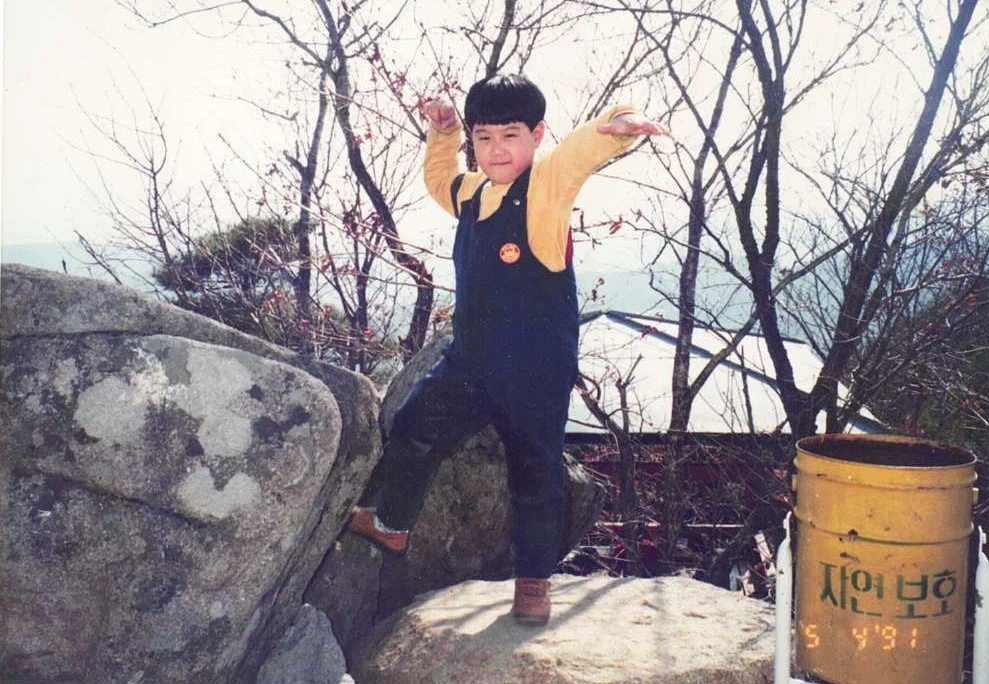
Why did your family move to the U.S. from Korea?
My family moved to the U.S. for my dad to find a different career. We actually had a business but it did not take off. My dad was thinking about moving to a different country. One of his best friends lived here [in the U.S.] and then my dad moved here too. He discovered medicine and then he became an acupuncturist and doctor of Eastern medicine.
What was this move like for you as a 15 or 16-year-old?
When I came to this country, basically everything was different. There are culture differences but also how people think about society and how you should act is different. In Korea, I played a lot of sports, and if you are on a team, then you do some things that maybe you shouldn’t do here [in the U.S]. They’re very strict in this country. I learned, oh, I cannot behave the same as I can in Korea. That [experience] actually helped me.
Was it ever stressful for you to come to the U.S. or be in a new country?
I'm an only child so not really. I didn’t get stressed thinking about moving to this country and starting my life here because I [knew I] should follow my parents. But I missed my grandparents, cousins, and friends in Korea. I quickly met good friends here, though, so it was good for me.
Can you share the story about being separated from your dad?
I believe a lot of people are having the same issues, especially international students who come here to study and are separated from their parents or just one of their parents moved here [with them] and stayed with them [while they were in school]. There's not much of a story. I just followed my dad's guide on how I should act, how I should react and behave here in this country. I didn’t follow one hundred percent, of course, but it guided me well to assimilate into this community of Koreans, especially Korean Americans.
Do you live or work in Koreatown and what are your thoughts on the neighborhood?
The relationship between me and Koreatown is inevitable, I believe. Ever since I came to this country, I've lived in La Mirada, which is in L.A. County. I’ve always been linked to Los Angeles because when I first came here [to the U.S.], we went to church there [in L.A.]. It's called the Church of Glory of Christ. Sometime later, I went to the church called the Nanum Church. It has a really good purpose. It's built to treat and cure people, especially teenagers, who have substance use disorder. They gather them in the church and then they preach God's word to them. My father was one of the doctors who treated the pastors, employees, and church families. I learned guitar from one of the pastors, Pastor Han. Every week, we came to this city and spent time here. The city of Los Angeles, to me, is my other hometown.
Do you have a favorite place in Koreatown?
My favorite place in Koreatown is the [Koreatown] Cultural Center that is located on Wilshire [Boulevard] and passing La Brea [Avenue]. It’s a great exhibition introducing Korean culture. They have some activities as well. If you ask me about the restaurants, there are so many. I can't list them all.
Can you share a specific memory that you have in Koreatown?
One of the very memorable moments that I had was when we [members of the church] went out into the public and we served the unhoused people good meals. Their faces and voices, the applause — what they gave us — it's just unforgettable.
How do you refer to your practice?
I refer to my practice as whole body therapy.
What makes whole body therapy unique from other modalities like traditional Chinese medicine?
The difference between the traditional Chinese medicine and the whole body therapy is that one specifically focuses on traditional principles, while the other one is more about integration. I believe whole body therapy is one form of integrative medicine where the benefits and principles of Western medicine and Eastern medicine are combined to create and provide a better treatment for the patient.
When did you begin learning about this practice?
I started studying Eastern medicine in 2010 right after I graduated with a bachelor's degree.
Can you describe a memory of when you were studying Eastern medicine?
A particular memory that I have of studying this medicine is “cheating.” I am the third generation of this practice. Most of the principles I've learned from my parents and grandparents, so I call it “cheating,” but I’ve also integrated other styles. If you ask me about Eastern medicine, [for example] the acupuncture therapeutic methodology, there are 10,000 different styles of it. What I use is the meridian style. Dr. Brenda Oh, another famous and very good practitioner, is using the five elements, most likely. Different techniques and styles have different meanings, causes, and principles. By learning these, I was able to expand my knowledge and better integrate these methodologies.
Were you taught by a mentor or your parents?
My mentors are, of course, my parents and grandparents. I have also met good professors and good friends who are dedicated to this medicine. That really inspired me and pushed me to finish studying and learn more than what I expected to learn about myself.
How would you say you incorporate whole body therapy into your daily life?
Whole body therapy is everywhere, actually. It does not mean that I give a treatment to the patients but [give them] stretching and posture [exercises] and [integrate] other methodologies I’ve mentioned. I believe everyone is having this whole body therapy in everyday life, they just don’t realize it.
Can you explain the five elements of whole body therapy?
It's perfectly linked with the principles of Eastern medicine where the body has five elements and those elements represent each organ. There are a lot of relationships between those elements and we utilize, mimic, and correct these relationships so the whole body can be maintained well.
How have you seen whole body therapy improve people’s wellbeing and health?
Whole body therapy, as a principle, — it helps most of the patients because it does not involve a lot of artificial remedies. Instead, they mobilize their own body through stretching and strengthening and utilizing the energy and blood flow on their own, not by aid of medication. Whole body therapy helps people maintain their health more than artificial remedies.
Can you describe a particular case of someone that you brought through this process and how it impacted you?
One of the patients that I had was a stroke patient. Although he was only in his 50s, he had a 12-year history of strokes. He had a stroke at an early age and he was just living a terrible life. He was my dad's patient first and then I took over. During his thirteenth session, he walked. He could not walk before and now he could. It's not my strength alone. I'm a Christian, so there is a third force that helped him. Health helped him for sure. That really got me. It has a lot of meaning to it because the stroke patient had a lot of different issues with their body and was taking 10, 15 medications. It can suppress the symptoms and signs, but the pharmaceutical agents are getting directly into the cells’ signalling pathways. They could be agents, hormones, whatever. By using this whole body therapy — Eastern medicine, acupuncture, and then herbal medicine — he was basically cured. Now, he is running. That was just one of the miracles that I had in my practice. That really inspired me and I thought, I should research more. I should contribute to this community by practicing this medicine more and more.
How do you create outreach for people to try whole body therapy?
Most of the people in this country — California, especially in Koreatown — know about whole body therapy, Eastern medicine, or natural therapy. There are many states who do not have many practitioners of this medicine, though, so it should be linked with health insurance. Create more activities and draw people out — announce that this medicine exists and advertise it to the public.
Is there a place that you feel like you could use healing for yourself, particularly involving whole body therapy?
I do not believe there is this particular space or place that you should be going to practice this medicine. Whole body therapy is very broad. It can have a lot of meanings. For general people, to practice a whole body therapy, they can be anywhere. It does not have to be someone's clinic or a hospital or big places. You can practice this at home in your most comfortable space like your room or bed.
How do you see Western and traditional healing arts integrated in your practice?
When Western and Eastern medicine are combined, it’s called integrative medicine. There are many cases that are involved in this. I've introduced it to you with this stroke patient but it could also be infertility. It could be indigestion. It could be psychological. It could be a mood swing. Right now, many people that are in this era of the world are having some kind of stress. If you can manage yourself by finding a good hobby, then that's good, but most of them are not [able to]. Most people are just tied up with survival and can't really find a way to relieve themselves [of their stress]. Integrative medicine can be particularly helpful for emotional or psychological disorders. What can Western medicine do for psychological disorders? There’s not much. Maybe serotonin, S.S.R.I. [selective serotonin reuptake inhibitor], and lithium carbonate for bipolar disorder, something like that. And anxiety? Western medicine is just mimicking and manipulating the pathway of these hormones. Of course, this will cause adverse side effects. By combining the principles of Western medicine, where specific cells and agents can be controlled, and by enhancing this whole body health wellness, then treatment could be more preventative and disorders could be treated.
Have you seen people begin turning towards more holistic methods of treatment and healing?
Yes. Right now, the trend of medicine is going towards natural therapy, which is perfectly linked with this whole body medicine. Eastern medicine and traditional Chinese medicine include acupuncture and herbal medicine, as well as moxibustion (heat therapy). There's many different modalities. This medicine can be more useful for treating people who cannot be helped solely using Western medicine principles.
Can you explain what moxibustion does and why it's used?
Moxibustion is one of the modalities of Eastern medicine. Basically, it's a mugwort. The leaf is going to be burned off of your skin. Therapeutic agents will penetrate the skin and go into your system and your meridian, what we call the channel, and then boost up the organs that are associated with it. As it is a form of a heat therapy, it could be greatly used for inflammation.
Could you explain a little about cupping as well?
Cupping is a bit of a different story. It is solely developed for pain management. There are many different materials that are used for cupping. One of the most commonly used is glass and there is plastic for the air suction. Traditionally, it was used with bamboo, but because of sanitizing issues, it’s not really allowed in this country. The principle [of cupping] is to suck up the skin and try to lift out the dead blood cells, or the pathogenic agents that are embedded in the blood, to the surface and promote a fresh flow of blood in that targeted tissue and location. Depending on the condition that individuals have, there could be a bruise.
Throughout your study of traditional and whole-body therapy, what are some of the differences you've seen between how these things are practiced in the U.S. versus in Korea or other countries?
There are many methodologies and differences in whole body therapy or Eastern medicine being practiced in this country and other countries. It's the modern modalities. In this country, you cannot have injections. In Korea, and I believe like China and other countries, it is possible. You can think about it as Botox because Botox is herbal extraction but it’s more paralyzing stuff. The therapeutic agents of the herbs will be distracted and then it could be used intramuscularly. That therapeutic agent works directly with the muscles and the tendons and the ligaments or the soft tissues in the body. Because they use a hollow tube, it's considered to be an injection. In this country, it's prohibited. It’s used for muscle or pain relief because you don't want that to happen in your brain or in your blood.
You currently work at Dongguk University, L.A. Can you describe a little about where it's located and what makes it unique?
Yes, I'm currently working at Dongguk University as an Associate Dean of Academic Affairs. I’m also Associate Clinic Director and Director of Student Services. Dongguk University of Los Angeles is between 4th Street and 5th Street and on Shatto [Place]. It's one of the reputable universities of traditional Chinese medicine or Eastern medicine. All the people are friendly and most of the students are ambitious and have a vision and eagerness to contribute to the community by practicing this medicine. I'm very happy working there.
In your practice, who are your regular clients?
My clients are mostly people who are referred by their friends or acquaintances or are around the community near my clinic. Insurance also refers patients to me.
What challenges have you encountered as someone who practices whole-body therapy in the U.S.?
One of the biggest challenges for the future practitioner of this medicine will be reputation. This medicine, as I shared before, is not known to many other communities. In California, most likely they will know about it [whole body therapy], but if they’re in other states, people don’t know about this medicine. Washington actually has a good amount of acupuncturists and practitioners but it just gets crowded in one specific place. Look at L.A. here. How many acupuncture clinics are available? So many, right? The saturation of the practice in certain locations is one of the challenges of practicing in the U.S. If they [practitioners] can open up, if they can be a pioneer in different states and different cities, they could be very successful.
In what ways do you think people do not understand your practices?
The thing people do not understand about the practice of whole body therapy, or Eastern medicine, is that it mostly deals with things that we cannot see. The basic principle of this medicine is treating a patient by balancing; balancing yin and yang and balancing qi and blood. We can’t see that, right? We explain this to our patients, and some of them understand, but some do not. By living in Western society, we're solely practicing and being informed about Western medicine, most likely anatomy and physiology. With Eastern medicine, we cannot prove or show its effectiveness in the same way. We have to explain to our patients using principles of Eastern medicine and that's really challenging. The people have a hard time understanding or grasping how they are being treated for a particular condition or disorder or disease. What they care about is that they get better. As long as they get better, we can utilize some of the principles of this Eastern medicine and then Western medicine as well.
Pain management, for example: If I have wrist pain, local points will be used on the wrist. The needles can be put in the elbow, in the shoulder, and on the other side of the knee. Why? Because they are contralateral at distance and because of the proximal principle. This can be combined with the Western medicine principle, the myofascial trigger point, because these muscles are all related to the elbow. I believe the trend of Western and Eastern medicine, integrative medicine, is how I should emphasize treating patients.
What do you think would happen if people understood the balance of yin and yang?
If people understood the principle of yin and yang, and how it gets balanced, then there would be more people with healthy conditions.
Can you describe where your healing ability comes from?
The ability to heal is that of maintaining one’s homeostasis and how dedicated they are. Some people want to be healthy, but they still live a life that does not create a healthy life. Their behavior — what they eat, what they drink, what they do — all these matters are related to maintaining health. Healing ability is related to someone's mind.
How do you feel your practice relates to or draws from your childhood religion or current religious worldviews?
I believe the religious factors have a strong link with someone's mindset. In order to have the right mindset, I believe you should have something that grounds you in a place and that you don’t stray away from that position. A lot of times, it could be religion. I'm a Christian. Christianity is not just believing Jesus is the Savior of the Lord, but it’s also the journey. It is the journey between you and the Holy Spirit and God. You [have to] keep looking back on what you have [and on] your behavior. You [have to] keep confessing and then you have to be reminded by your behavior what you should do in the future. As it is related with whole body therapy, religion is linked with this medicine.
What are ways that you get your patient to believe in whole body therapy?
First of all, I introduce this whole body medicine to my patients. If the patient is skeptical about this medicine and the principles, then I just very vaguely explain what traditional Chinese medicine or Eastern medicine will do compared to the Western medicine and how it will make them better. In the treatment process, if the patient gets better and feels better, then of course, it draws interest from the patient. They think, “Oh, I never tried this and I was skeptical, but it worked.” It is working for them. In that case, it's easier for me to explain more, not forcing them — I'm not forcing my patients to believe the principle of Eastern medicine — but just introducing them to the principles of Eastern medicine compared to Western medicine and how it heals.
How do you imagine traditional healing evolving in the future?
The future of this whole body therapy is bright because now it is being integrated with Western medicine. It's helping more people and creating less adverse effects and less side effects. I strongly encourage the people who just got into studying this medicine [to] just keep doing it and then you will see the success.
How has your life been different than what you had imagined or originally planned?
My life from what I imagined originally from my childhood is actually not much different in the sense that I help other people, I treat people, but the path is completely different. I was studying for a GRE (Graduate Records Examinations) and then PCAT (Pharmacy College Admission Test) at the same time and coming to the Western medicine from pre-med versus biological science. I was really longing for pharmacogenetics, actually. It got altered to more of a natural therapy and then the whole body therapy, Eastern medicine. The life that I had imagined helping people has not changed much but the methodology has.
All of your achievements are very inspiring. Are there any words of wisdom you'd like to pass along to me?
I cannot say wisdom because I'm not that wise. But the advice and guidance that I give, not only for future practitioners, but for all the people, all the students, is just don't give up. There are many ways to achieve your vision and your dreams. Even if you meet an obstacle, there's always a way to get over it. Do not be put down by reality. If you keep imagining what you will do and what you can contribute to the world and the community, then just keep doing it, and then you will get there.