

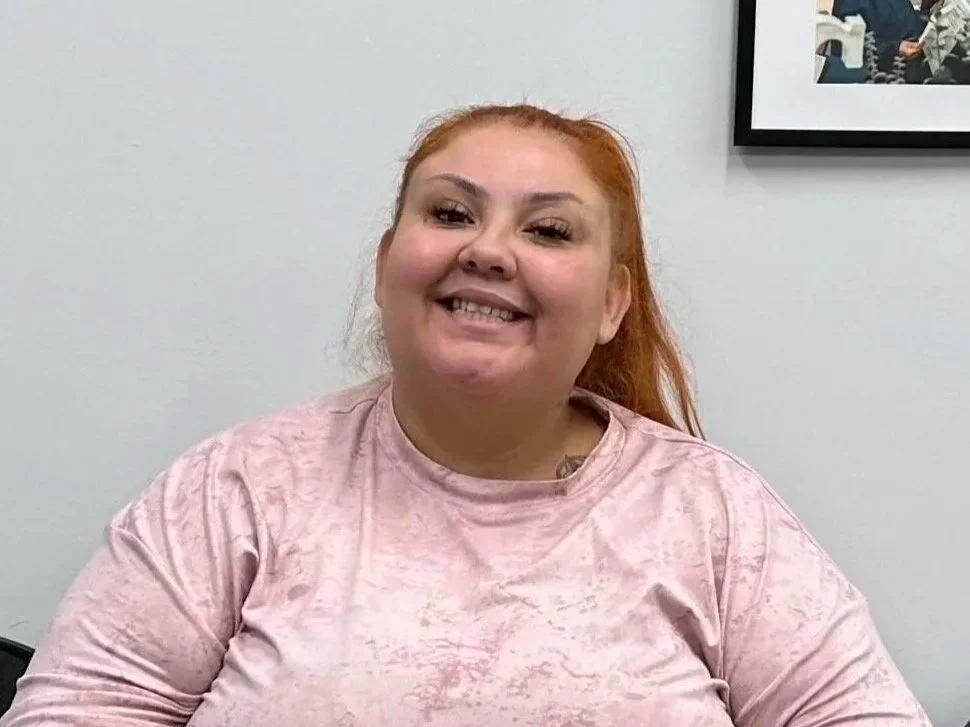
Elizabeth “Elide” Garcia
Elide is a 30-year-old Mexican American woman who was born in Los Angeles and raised in Pico-Union, where she still resides. In this interview, Elide recounts her battle with substance use and her road to recovery while also raising her children. Today, she works at a residential facility in a detox center, sharing her own experiences of addiction in hopes of helping others going through similar things.
Tomorrow is Today
Interview by Diana Orellana and Lauren Gilbert
Can you tell us your name, age, and where you were born?
My name is Elide Garcia. I am 30 years old. I was born in Los Angeles, California, and grew up in the Pico-Union district, where I still live.
How do you identify?
I am Hispanic and of Mexican American [descent].
Please tell us a little bit about your family.
I grew up in a two-parent household until I was 12 years old. There was a lot of machismo in my home, so my dad eventually got put out by social workers. It was either ‘He leaves, or the kids are going into the foster care system.’ I am one of four siblings: I have an older sister, an older brother, and a younger sister. We grew up very sheltered. My dad was very protective. If we went out, we had to call him almost every hour. After he left, we kind of went wild and did whatever we wanted.
Was this protectiveness mostly toward you?
It was toward the whole family, but me in particular. Everyone in the family recognized me as [my dad’s] favorite child. I’m the third child.
Did you have a close relationship with your siblings or mother?
I only have a close relationship with my sister now, and not too much with my mother.
Who was your role model when you were growing up?
My role model when I was growing up was my older sister. In my teens, it was my therapist. My teen years were very hectic. I started gangbanging at the age of 14. I was in and out of juvenile halls. Before I was 18, I had already spent at least three years incarcerated, back and forth [out of juvenile detention centers]. I was a probation kid, so I always had to check in with my probation officer monthly.
Because my father was gone, I didn’t have a lot of structure, and I didn’t respect my mother enough to listen to her. She was freed from my dad as well, so she kind of went into this phase where she was clubbing with her friends and taking care of herself instead of prioritizing our needs.
Do you think things would’ve been different if your dad hadn’t left?
I definitely feel like I would not have been able to take the path that I did. If we didn’t listen to [my father], we were beaten into it. As a child, I used to hate [substances]. I used to hate alcohol because my dad would fall asleep, and he used to make all these broken promises because he was too drunk. I had some sips of beer out of curiosity when I was probably 8 or 9, but I didn’t like it much. I started using substances after he left.
During your childhood, was there anyone in particular you turned to for support?
[I’d turn to] my best friend, who was also going down the same path as me, and my boyfriend, who later died, for support.
Did you have any dreams or aspirations growing up?
I wanted to be a lawyer. I don’t want to be one anymore because things are very black-and-white in a court setting. It’s either “yes” or “no.” I feel like there are a lot of external factors that play into every single individual’s life. You can’t just put a [lens] on a person and be like, “Well, there’s no exception but this.”
When in life have you felt most alone?
[I felt most alone] when initiating recovery this [most recent] time. I feel like things had to get really rough and shit had to hit the fan for me to accept everybody’s help and stop trying to rely on my own will. I do a lot of praying now.
When was your first experience using substances?
I was 13 when I first drank alcohol, 14 years old when I first used marijuana, and 15 when I started using heavier substances. My preference was ecstasy.
How were you introduced to drugs?
My gang friends. I wasn’t peer pressured at all. I think that I still would have taken the alcohol route [no matter who my friends were] because alcoholism is ingrained in my family. Every single one of my uncles drinks, and my father drank too. Alcoholism is definitely part of us.
With the heavy substances, I’m not too sure. Marijuana, ecstasy, the occasional experimentation with crystal meth or cocaine ... Before there were dispensaries, there was a plug [drug dealer] on a corner we would just get it from, you know? I was going to school [at the time]. I actually came to school here in this building when it was the Metropolitan Skill Center.
Are you working now?
I am. I work at Uplift Recovery in Pasadena as a tech. I’m a registered substance abuse technician and am going back to school.
Did other students use substances, or was it just within your friend group?
A lot of the kids that I went to school with [used substances]. We would smoke in the locker area before going to P.E. We would take water bottles with alcohol in them to school and stuff like that. It was very normalized.
How often were you using substances, and did anyone know you were using?
[I was using substances] daily. A good portion of my family knew I was using. In my friend group, everybody knew. My father was not okay with it, so I tried to hide it from him as much as I could. I tried not to go around him when I was under the influence. My mom wasn’t okay with it, but, like I said, I didn’t respect her enough to actually care. Whenever I was home and consuming, I would just lock myself in my room.
Do you think one substance affected you more than the others?
Alcohol affected me way more because when I was completely drunk, there was no telling what route it was going to take. I was either going to have a great time and be this social, jolly person, or go deep into my emotions and snap at people. It all depended on who I was with.
Can you tell us more about your experience using substances, particularly marijuana and ecstasy?
I consumed ecstasy for two years on a daily basis — more than two pills a day. I always liked school, regardless of everything else I did, like gangbanging and all that. But during that period, school lost my interest. There was really no other thing that I could think of besides getting high.
How did these substances make you feel? Did they each make you feel something different, or would they all be the same?
Ecstasy took me out of reality, even if I was worried or in my [feelings] about something. It was hard for me to understand that my dad was very hands-on [when I was] growing up. Even though he would beat the shit out of us, he would plan family activities. He would take us to Disneyland and all these other places. My mom was hands-off. It was like she was freed of her responsibilities. That was something I didn’t understand, and I didn’t really feel good about growing up. Ecstasy took me out of that difficult time.
How did these substances change your everyday life?
I started feeling discouraged about human connection overall, having abandonment issues, not wanting to connect with other people, and cultivating good relationships. At that time, it was like, They’re all just going to leave eventually. So I didn’t put effort into anything besides gangbanging and consuming. I became angrier when I started using substances. I became very impulsive.
Did anyone notice anything new when you were using substances?
My therapist. I was forced into therapy by the probation department. It helped once I stopped fighting it. One day, [my therapist] just said, ‘Do you want to talk about what’s going on and why you’re so angry all of a sudden?’ Then I just came forth and told her, “I’ve been getting high daily — way more than I should be.” I realized [I had a problem with substance use] in adulthood after my third DUI.
Did anyone reach out to help you?
My mentor at school [reached out]. She knew about my substance use because she could relate. She was the one who suggested I go into recovery. She grew up in the ghetto gangbanging as well, so she snapped out of her professionalism and was like, ‘Listen here, bitch. You’re going into recovery, and this is what you’re going to do.’ For the first time ever, I listened. I was 28.
What has been your worst experience using substances?
My worst experience using substances was being around my very beloved brother, who died while I consumed alcohol and allowed him to use crazy quantities of crystal meth. I watched him go into psychosis, not being able to help him yet, not choosing to take the substance from him.
What or who motivated you to start your recovery journey?
What motivated me to start my recovery journey was ultimately my children — not remembering experiences I had with them or not bonding with them because I was hungover. I wasn’t in the mood to be around them.
Are you close to your children?
I am. I’m their only parent. Their dad lives in Skid Row (Central City East). I do not have a good relationship with him.
Was there someone who motivated you that you did not expect?
My mentor, because we’re from two different gangs. My brother and my cousin as well. My brother passed on January 10, 2023, and my cousin passed on January 11, 2023. Their deaths took a big toll on me. I didn’t know that there were centers dedicated to helping addicts. I didn’t know there were residential settings where people could go or that Medicare [would cover their stay].
If I had known, I would have tricked my brother into [getting treatment] and still have him here, but that’s not the case. That definitely was the reason why I wanted to get sober. Now I have two nieces who don’t have [their father]. That’s a permanent situation for the rest of their lives, when we could have thrown him in rehab as many times as he needed.
Can you tell us more about your experiences in residential treatment programs?
The first time that I did a substance abuse program, I did it through Eggleston in Irwindale. That was outpatient, more like individual sessions, and it was three months long. I was able to stay sober from alcohol after completing that program for about six months, and that was in 2018. That was court-ordered, so I wasn’t there because I wanted to get sober. I was just complying with the court requirements.
After that, I kept getting high and drinking, but I convinced myself that it was now like a reward system since I went back to school. I was a single mom, so every time that I got something done, I excused that with my substance intake. I deserve a blunt. I deserve a bottle of champagne. I just didn’t know how to stop. Once I had a blunt, it kept happening.
When I was 28, my parents started attacking my mental health. I’m the only one in the family who ever accepted therapy and came to understand and believe in it. I understand that we have to heal from all that traumatic shit that we have had in our lives. They don’t really see that. They’re like, ‘As long as you’re able to work and breathe and you have two feet and two arms, you can work and just get over it.’ This is very common, especially in the Latino community.
After that, I went to [Las Encinas Hospital], which is a mental health facility in Pasadena. After Encinas, I was with Clinica Romero and completed their outpatient program as well. I stayed sober for about eight months, but then I relapsed. This last time, I went into Socorro CRI-Help on July 8. There were no external factors besides my mentor and my kids that influenced me to do it. I’ve been sober since June 17, 2024.
How did your relapses affect you?
My daughter had just turned 7, and she started vocalizing, ‘Mom, you smell like alcohol. You’re stinky! Go take a shower.’ My son would be like, ‘What’s that smell?’ And it would be cannabis or whatnot. Having them not realize that I was under the influence, but knowing that something was wrong, affected me. I would kind of stay away [from them] until I wasn’t high anymore and then come back [home]. That took a toll on me because then social workers came and started questioning my mothering and ability to be their mom.
What are some other obstacles you have faced while in your treatment?
I came to the realization that ultimately, it’s just me. Nobody has to be there, and nobody owes my kids or me an apology of any kind. But if I could get an apology from anyone, [it would be] from my dad.
What is the hardest stage of recovery?
The detachment from family.
Do you believe you need support to have a good recovery?
No, I just need myself. But recovery comes with support. With the fellowship and programs, people will show up for you even if you don’t want support. I have a sponsor. Her name is Vanessa Ramos, and I feel like it was divine intervention from God that I met her. She has influenced me greatly and keeps me very accountable, not just in recovery, but everywhere else.
Do you wish you had more support from your family?
Not at this point. I used to, but I don’t anymore. I’ve come to understand that they are who they are, and I can only control myself.
What has been the most helpful part of your recovery process?
My kids’ happiness. They’re 7 and 5. I’ve had very vivid dreams of my brother, where [he tells me] it’s okay.
How has your relationship with your children changed since you’ve been in recovery?
They can definitely get away with a lot more shit because I have a lot of patience. When I was in my active addiction, it was like, “Go to time-out and face the corner.” Subconsciously, I was doing things that my parents had done to me. I didn’t realize that I was becoming my mom.
I’ve apologized to my kids for that. They’ll just be like, ‘It’s okay, Mom.’ I’ve normalized apologizing in my household because we didn’t have that growing up. I made mistakes. I’m not perfect, but I feel like [my children] are aware that their mom recognizes that. Even when I don’t deserve it, they’re still so loving.
Why don’t you think you deserve it?
Because there were periods when I prioritized my addiction and my substance use. I was very selfish in that manner. My emotions made me feel like I needed to either get out of reality or not feel them at all. [Doing so] consisted of using, but in reality, I wasn’t paying attention to how [my children] felt.
What has been the biggest change in your life since actively participating in recovery?
The few friends I still have, who were with me through the gangbanging and all that, also cut off certain substances. They’ve done that on their own. At any gatherings that we have, no alcohol is allowed. I think that’s their small way of saying, ‘This is what you can do.’
While in recovery, have you repaired any relationships?
I have somewhat repaired my relationship with my mom, but there are still a lot of boundaries that I have to firmly stand on for it to work. If I allow her to overstep, I’ll go to shit real quick. With what she knew, I feel like she was the best mom she could have been, but that was only up till my dad left. After that, I felt like she prioritized herself and felt like a free woman.
Do your kids still have a relationship with their grandmother?
My kids are still allowed to be around my mom. Because of my last relapse, I lost physical custody of them. They’re projected to come back into my custody in March of 2025. I see them. I have overnight stays with them. There’s no limit to what I can do with them, but I have to do drug tests, and I have to do all these things for the social workers.
They have a really good connection with their grandma, and I don’t plan on taking that away. I feel like their grandma has a certain capacity, and that capacity is not surpassing basic needs. As their mom, I have to do my part to [go beyond] just their basic needs.
Do you think that the Department of Children and Family Services or Child Protective Services (CPS) had a big role in pushing you toward recovery?
No, I relapsed because of DCFS. I relapsed because they came and took my kids. That was my last relapse. My mom kind of went on this rampage and was like, ‘If something happens to my grandkids, I’m going to go against the department.’ I feel like that had something to do with the social workers making the decisions that they did. They’ll never admit that. But I feel like that’s what happened. And because of my background, anybody can just look up my name and be like, “Oh, this is this kind of individual,” and they’ll overlook my recovery. They’ll overlook all the positive stuff and just look at the negative stuff that’s on my record.
When you think about yourself, do you see those negative things?
I’ve learned to accept and be grateful for the choices that I’ve made, even the bad ones. The best thing about that is that I can talk to my kids and hope they learn from my mistakes and don’t have to live it themselves. Also, they can relate to other kids who maybe don’t have that support at home or don’t have a parent to lean on. I’ve learned to just own it.
What have you learned through your alcohol recovery?
It takes guts. All the times that I thought I was very weak and not strong for being vulnerable, for being all the things that Latinos are not — it’s completely the opposite. I understand now that that kind of thing [going into recovery] takes strength, you know? Being able to put the bottle down and be like, “I feel like shit because of all this.” That takes a lot of strength.
What type of coping skills do you use now?
I journal. I meditate every morning for 30 minutes. I go to my home [support] group once a week. I go to at least three Narcotics Anonymous (NA) meetings a week. I swim. That’s a big one.
What are the proudest moments in your life?
I’m proud of my resilience and my children. My children are able to communicate their emotions, and they’re not holding back. I think that’s huge because growing up, I didn’t communicate how I felt.
If you could change something in the past, what would you change?
If I could change something in the past, I would still have my brother here, along with two of my best friends who passed away growing up.
Please tell us a little about your job as a substance abuse technician and how your own lived experience helps in your work.
[I work at] a residential facility in a detox center. Our clients can stay for a maximum of 30 days. I honestly feel like that’s not enough [time], but we do what we can. Being a technician, I’m paid to take care of people: make sure they’re taking their medication on time and make sure that nobody’s getting high in the facility.
I also run groups. One group that I run is a gratitude group. When I run them, I try to communicate with [the patients]. We sit down and do the actual exercises that work for me. Whenever I get triggered, I’ll sit down, take my phone out, and start writing everything that I am grateful for that day. When you visualize all the positive things you have in your life, it makes it a little harder for you to pick up that beer or pipe or anything.
Being around them [the patients], it’s amazing to watch them flourish in that amount of time. They’ll come in all beat out and sleep for days, but with time, you’ll see them come upstairs, get involved, and start talking to people.
Having that lived experience, I feel that it helps them because it allows them to accept our truth and see us working on the other side of being an addict, and that it has an impact. When we tell them, “Hey, I’m an addict too,” every other negative stigma goes away, and then it’s just two human beings who made the wrong choices just talking about life.
In every area of the criminal justice system, the people who work with these individuals have to have lived experiences; otherwise, you’re just looking at this person as someone who keeps making mistakes. You’re not going to have much compassion or remorse for them. In reality, there’s so much that plays into that.
What is an interesting fact about you?
I hated the police force when I was growing up. But now I feel like, in order to actually make a change in our community, we have to work with them as part of it.
Do you have any hobbies that you are still pursuing?
I like to meditate. I like to go exploring randomly and take road trips with no destination and no planning. I just [like to have] a whole day to myself, wandering off.
Why did you decide to share your story?
I feel like it has to be recognized that we all have lived similar experiences, and bringing awareness to that is going to allow for a wider population of folks to accept, “I am an addict. I need help.” Helping one person is enough for me. That’s why I go to work every day, thinking that if I can make a difference for one of our clients, then that’s enough.
Do you have any words that you would like to say to folks who might be struggling with substances?
Just stop. Stop putting it off. As addicts, we find every excuse in the book to be like, “I’ll go tomorrow.” Just stop. Tomorrow is today. If you don’t make that decision today, you might as well realize that you’re giving yourself another 24 hours to potentially overdose somewhere else.
What recovery services would you recommend?
I think the NA fellowship is the most genuine example that you could get. No one funds them. Everything they do comes from the addicts who utilize the fellowship. They’re worldwide. You can go into an NA meeting in a different country and feel welcomed. You can meet the most different people — you could have grown up in Beverly Hills — and you’ll find something that resonates from somebody who came from the ghetto because we’re all human beings.
It doesn’t matter how much money we have in an account or what materialistic belongings we have. We all have the same feelings. We all feel anger, we all feel disappointment, and we all feel sadness. If you’re struggling with substance use, NA is definitely where to go.
Do you have any questions for us students?
I don’t. But thank you for holding these interviews. It’s needed, especially in our area [of Los Angeles]. I don’t think folks realize that substance use will slowly kill them. It’s just a hit, but they don’t realize that it could be their last.