

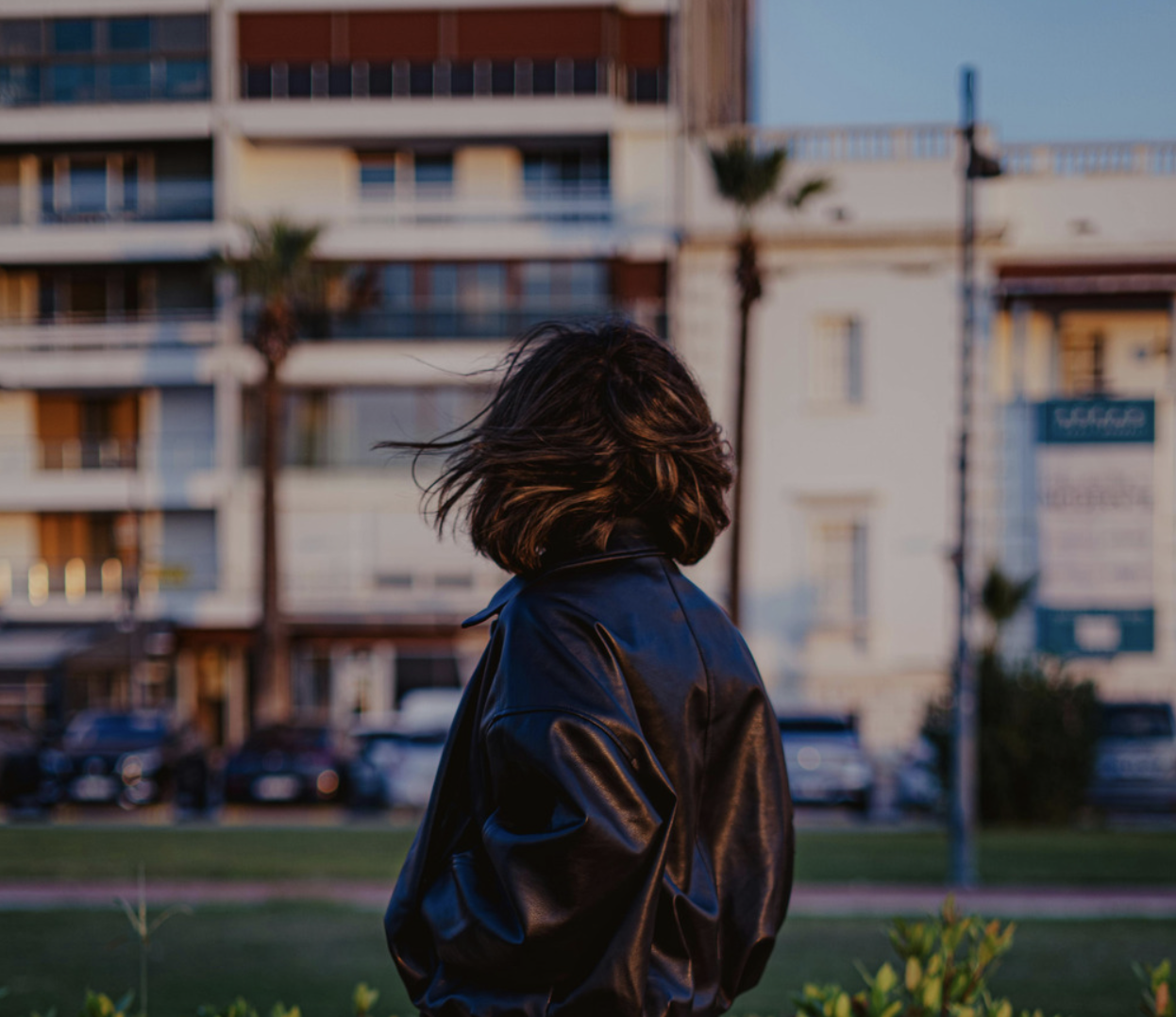
Valeria Fausto
Valeria is an 18-year-old high school student who grew up in the Westlake area of Los Angeles. In this interview, Valeria discusses her upbringing and family, specifically her uncle, who battled addiction for many years before taking his own life. She reflects on the stigmas surrounding his condition and getting mental health support, especially in Latin American communities, and how that lack of support contributed to much pain in her life. Valeria believes that we should normalize discussions surrounding substance misuse and how to get proper help.
It’s Not the End
Interview by Jisoo Yoo and Siyeon Kim
What is your name and age? Where were you born?
My name is Valeria. I am 18. I currently reside in the Westlake area of Los Angeles, where I grew up.
How do you identify?
I use she/her pronouns. I am Hispanic. My parents were born in Mexico and immigrated [to the United States]. I’m in my last year of high school.
Where’s your hometown?
I’ve lived in L.A. for most of my life. I used to live a bit closer to [downtown], but I moved 12 years ago, so now I’m closer [to Koreatown].
Do you have any hobbies?
I go to a theater school. Right now, I’m rehearsing for the spring and fall shows, and I’m very into that. I go to theater competitions, and I also like writing.
Can you tell me about your family and your relationship with them while growing up?
I currently live with four others: my mom, dad, and two younger brothers. I do have two other siblings [besides my younger brothers], but they stayed back in Mexico. When my parents were immigrating here, they decided to leave [my other siblings] there because they thought it wasn’t safe to bring them since [they would be] crossing through a really dangerous area. I love my family. We definitely have a lot of rocky moments, but I still care for and appreciate them.
Who was your role model when you were growing up?
I used to get babysat a lot, so probably my babysitter’s children. They were older, and I liked the way they acted and did things.
How would you describe your childhood?
My childhood was interesting. I wasn’t really supposed to be born. It was kind of a rash decision [made by my parents]. I didn’t have much growing up because my parents used to work throughout the night. I kind of didn’t see them when I was younger. I used to be taken care of by a lot of other people. It was a bit rough, but I’m okay now.
What’s your favorite memory from your childhood?
Probably when we went to the beach for the first time and ate a lot of food. It was so nice.
What were your teen years like?
Very rocky. I had a lot of [mental health] problems growing up. That made it hard, especially because when you’re a teenager, you feel like everybody is [judging] you. You think that no matter what you do or say, people are going to judge you, and that’s depressing. I went through that a lot.
How was your relationship with your family?
Growing up, an uncle often stayed with us, but there were times he did not. He was in and out of our home. I really cared about him because he was always there for us and took care of us. He was a kind and good person. I didn’t start seeing issues until later on. My view of him was good from the beginning and still is.
What is your favorite memory of him?
He was very talkative. He liked to ramble. He used to joke a lot that I couldn’t date anyone until I was much older. That’s my biggest memory of him, especially when I would go to school, and he’d be like, ‘You can’t marry until you’re 40!’ [Laughs] I would just be like, “Oh, stop!”
When did you first notice that your uncle was using substances?
[I began to notice it] when I was about 9 years old. I think [everyone] could tell [when he started using drugs] because his personality shifted a lot. He was very cold and distant, and whenever he had sudden outbursts of energy, he’d go around talking and being energetic. He would want to work constantly, to the point where it was scary.
When my mom would do laundry, I used to go with her, and she would find things in [my uncle’s] pants. I wasn’t sure what it was when I was growing up because I didn’t know about those things. When I think about it now, I realize that they were pills, and I’m assuming cocaine or something like that. There was a white powder. I noticed those things. I remember my mom had this look on her face. She was very surprised, especially because we were in a public setting, and now she had drugs on her.
Do you know how he got access to drugs?
I live in a neighborhood where there are a lot of gangs. I live close to MacArthur Park, and if any of you have been there, you know how it is. I’m assuming he probably got it from someone who sells [drugs].
How did your uncle’s substance use impact your family?
My uncle had a lot of issues. He had his own family, but his wife ended up divorcing him and taking their daughter away. When he came [into our home], he basically had nothing. When he started using, the main person it was affecting was my mom. Seeing your family member, especially someone so close to you like a sibling, [use substances] is horrible. You don’t want to see someone you love and care about harming themselves. For my mom, it really took a toll. She worked overtime just to not think about it.
My uncle would disappear for months on end and then randomly come back. My grandmother would question him and my mom, but my mom didn’t want to tell her what he was doing because it would be awkward and hard to explain. Also, my dad was very against [my uncle’s substance use]. He would get super mad at him. According to my parents, my uncle would be on drugs around us and act strangely. [My dad] thought it was bad to be doing that in front of children.
How did your family seek support to navigate such a difficult situation?
My mom tried everything; she tried to get him to work. She thought that perhaps [his using substances] was because he was not busy with things. My mom works in a company, so she would recommend him [for a job], and he’d be fine for months on end, but it was obvious that he wasn’t able to keep a job because of the drugs. A lot of times, he would end up fighting with whoever was the boss or whoever was teaching him; he’d have outbursts in front of people. That affected everyone.
Another thing my mom did was try to put him in rehab. My uncle would ask for money, and my mom would be like, ‘If you go to rehab, I’ll give you money. I’ll do anything. Just go to rehab.’ My uncle [would agree], but it never worked out. They would have constant arguments because of that.
Did anyone in your uncle’s life notice that he was struggling with substances?
I think a lot of the extended family did [notice]. After using substances for two or three years, he started accusing people of things; he would say that he heard voices in his head and that everybody was talking badly about him. He would lash out at people. When someone does that to you, especially all of a sudden, you’re going to start assuming things. I think a lot of people knew he was on stuff.
He would also lash out at my family. One time, he was upset about something that had to do with my mom, and he was basically going to take his own life right then and there. My mom and I used to [leave the house] to get her [paycheck] — we’d be gone for maybe three hours. In that span of time, my uncle told my mom that everything happening to him was her fault, that he couldn’t stand it anymore, and that he was tired of everything.
He did all this, and my mom came back and realized what was happening, and they had a huge argument. This was one of the times when he left suddenly, and I didn’t see him until a year later. The awkward part was that when we saw him again, he was homeless, sitting on one of the benches outside my middle school.
Did anyone other than your mother offer support?
My grandmother tried to talk him out of it. I think my older sister also tried because they were very close when he was in Mexico. Nothing they said really went through his head.
Did anyone in your life notice that you were dealing with that kind of situation?
I was very quiet about the situation because I had no one to talk to about it. I kind of get mad at myself for thinking this back then, but I used to think, Who wants to talk about this kind of stuff? It’s so uncomfortable. So I never told anyone. People started noticing later on, but it was after the whole drug thing [with my uncle].
How did you feel seeing your uncle struggling with substance use?
I felt bad because it was clear that a lot of the things he did weren’t intentional. They weren’t things that he wanted to do. Growing up, I knew he was a good person, but he was struggling a lot. Seeing someone like that makes you feel horrible. Even if it’s not happening to you, seeing someone you know like that is the worst feeling. It breaks your heart.
During that time, I was dealing with something that happened before, so I would get really scared around him. I was afraid to be left alone with him, even when he was doing the simplest things, like touching my shoulder, patting me, or hugging me. I would get frightened because I didn’t know if he was in the right state of mind to be around me
How did you cope with seeing someone you cared about go through such challenges?
I didn’t really have any healthy coping skills. I ignored the situation as long as I could.
Were there any support systems that were particularly helpful or that you wish you’d had access to sooner?
I wish I could have talked to someone, like a counselor or anyone. I definitely didn’t want to say anything because I knew if they heard about it, they would have done something. It’s not like I wanted them to do anything about it. I just wish I had talked to someone then because it was clear that I was struggling with other things, and then [my uncle’s situation] on top of it. It wasn’t a good mentality to be living by.
What are your views on people who use substances?
I like to say that my views have changed. When I was younger, I saw that behavior in my family and thought it was bad. I saw every person who struggled with substance abuse as, Oh, they’re gross. They don’t know how to control themselves. I can’t imagine doing this to people I care about. That was my mentality because I was struggling with my own life and my own family. I had negative thoughts about [substance use].
When I look at it now and what I lived through — I have gone through personal substance abuse myself — I have more sympathy and care for people who have gone through that. It’s something that people struggle with. You can’t just take your mind off it. I thought people chose to [use substances]. I thought it was their fault and that nobody forced them to do [drugs]. Now, I think sometimes you don’t have a choice. You think that it’s the only thing that’s going to help you, and then it becomes an addiction.
What do you think about the stigma that surrounds substance use?
I can definitely see why there’s a big stigma around it. In my own experience, I was scared of my uncle. I didn’t really understand him and was afraid of him. I was scared whenever he got close to me or talked to me. I didn’t like being left alone with him because I thought I was going to get hurt. Honestly, it was a tough battle because I didn’t want to have those thoughts.
At the end of the day, people who struggle with substance use are just trying to do whatever’s best for them. I get the stigma around [substance use], but I wish people would also understand that it’s something a lot of people struggle with. It’s okay to understand them and not treat them like they’re horrible people.
What can we do to bring awareness to the harms of substance use?
Something we can do is have more events or protests against [the easy access] to drugs. That’s a big part of it. We always blame the substance users, but we never blame those who gave them the substance. We never take it out on people who [enable drug use]. We always blame the victim. So I think having more talks would be good.
Do you think recovery services in the community are accessible and available to folks who need support?
I think they are accessible, but maybe not to someone who is currently using substances. The thought of [going to] rehab and finding services is probably stressful for someone who’s doing drugs. They don’t want to go through all this trouble just for someone to tell them they’re fine. I think that’s also what my uncle felt. Maybe he felt like those programs, while accessible, weren’t doing much to help and were a lot of trouble. Sometimes I wish the rehab systems were free instead of having a price tag on them because that just makes them less [accessible] to someone who’s struggling.
What do you think would have helped your uncle in his recovery journey?
Perhaps [a professional] could have [helped] him. I think my uncle was struggling with some type of schizophrenia. Having someone who was licensed to deal with that would have definitely helped him. When I was in the seventh grade, my uncle left one time and told my mom that he was working. My mom believed him, but he never showed up again.
A week later, [someone] reported a hanged body they found in Santa Monica. [The police] called my mom because the person had their ID on them, and it turned out to be my uncle. They had found his body in the middle of the night. Before that, he’d already become a bit quiet and wasn’t very energetic. He was just telling my mom that he loved her, that he wished he wasn’t like this, and that it was his fault, that everything he did was his fault, and how one day he hoped he could make it up to her. He was saying all these things, and my mom thought he was going to get clean. That’s what she was hopeful for. It turned out that he was probably saying goodbye to her.
I wish that he’d had a professional to talk to. I think that would have helped a lot, even though in Hispanic communities we don’t talk to therapists. We just see them as people who are going to rob us of money. If he’d had that support system, it would have helped his journey.
What do you think your uncle would have liked to hear back then?
None of this in the end was his fault. At the end of the day, he thought everything that he went through was on him. Things weren’t going to get better, so why try? I wish someone had told him that it wasn’t his fault and that everything was going to be okay. Even if you keep failing, that doesn’t mean your life is over. It just means you should try harder or try to be more uplifting.
How would you like your uncle to be remembered?
[I’d like him to be remembered] by sharing his story and letting people know it’s not their fault for whatever happens, even if they think it is. Also, by sharing that he was a great person. Even if he had his issues, he was still a good uncle and an even better sibling to my mom. He always cared for her and for us. I would like him to be remembered that way.
Who has been the kindest to you in your life?
My mom. She’s been kind throughout my whole life, even though we have our problems and often go head-to-head on issues. She’s been very kind and talkative and supports me through [tough times].
What are the most important lessons you’ve learned in life?
Even if everything feels awful, and if some days you just don’t want to do anything and don’t feel like getting up, it’s not the end of the world. If things go wrong, it’s still not the end of the world. Know that nobody is judging you for that. Everybody goes through things, and it’s okay to ask for help.
Why did you decide to share your story today?
I want to let people know that feeling uncomfortable and having these types of issues, or having family members who use substances, is understandable. I want to erase that stigma because I never really hear stories about family members going through that type of situation. If I’d heard stories like that when I was younger, it would have made me feel a whole lot better.
What message would you like to share with others who might be in a similar situation?
Never be afraid to talk to someone, even if it seems challenging. It’s hard to talk about [substance misuse in the family] because you don’t want people to know that side of you. Overall, just being able to talk about it helps a lot.
As you’ve gotten older, do you think there’s more accessibility to resources for people in similar situations, or have you still encountered the same problem?
Being older and having more internet access, I see more stories that are similar to mine, where family members talk about living with a relative who has substance issues. I wish we could talk about it more and normalize it. We never really get to hear the family members’ side of the story.
I like hearing people who have struggled with substance misuse talk about it, but I also like to hear an outside perspective because it’s definitely something that’s not a black-and-white situation. It’s like an everything type of situation. What happened? How did it start? How did it end? Things like that.
At your school, do they offer any youth services for those who might want to talk to someone or perhaps are using substances themselves? Do students have access to information?
We have someone ready to listen to you if you have any problems, even if they involve substances. We have programs to help with anything. We have also had assemblies with another organization that deals with gang activity, but they also talk about substances and how they could affect your life. There are definitely services at my school.
Is there anything else you’d like to share with others regarding your story or anything related to reducing stigma when it comes to substance use in our community?
We should normalize discussing substance misuse because when we have the issue of people using drugs, we never really talk about how to get help. I hope it becomes more about understanding the truth.