

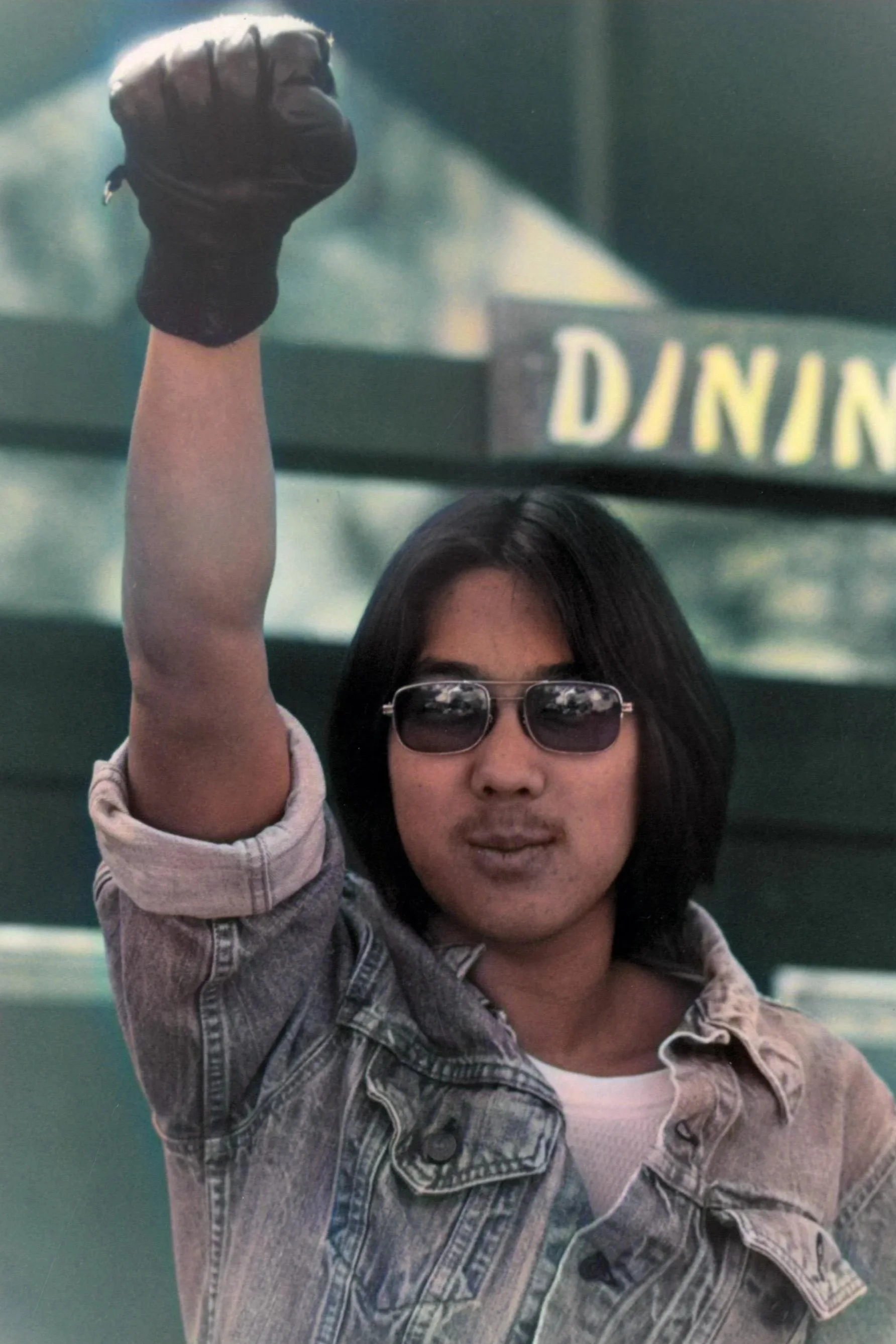
Billy Yoon
Billy Yoon is a third-generation American Korean born and raised in Mid-City Los Angeles, where his family has lived since 1954. The grandson of early Korean immigrants, he left a pre-med track at UCLA to pursue art, going on to teach for 15 years and earning national recognition for student-painted murals. Today he owns Koreana, a storied Koreatown shop with one of the world's largest collections of vintage Korean artifacts — and a living piece of L.A. Korean American history.
Be Willing to Talk to Others and Be Willing to Listen to Others
Interview by Janice Yun and Jane Lee
Can you start by telling us your name, age, and where you were born?
My name is Billy Yoon. I am 68 years old. I was born at Daniel Freeman Memorial Hospital in Inglewood, California.
Do you have a Korean name?
I do not have an official Korean name. But my paternal grandmother, Rosa, gave me a Korean name, which is Sung Jin.
Does it have a meaning?
I don’t know what it means. My sister used to joke that her Korean name meant “a beautiful meadow full of flowers,” and my Korean name meant “cow pasture.” So I’m sure that is not correct.
How do you identify?
I am a third-generation American Korean. Weirdly enough, I tend to use the word “American” first. I’ve always found it weird that we use the divisive term first and the uniting term second, so I tend to refer to myself as an American Korean. I cannot [read or write] Hangul (한글 — the Korean alphabet). I am third-generation; I think it’s called “samse” (삼세). The only time my parents actually [spoke Korean] was when one of the kids was in trouble and did not want us to know what they were talking about. So I know words and phrases in Korean, but for my life, I could not complete a sentence. The one thing in Korean that really loses me is the levels because it depends on [whether] you’re talking down to someone, across to your equal, or up to your superior.
Where did you grow up?
I grew up in Mid-City L.A. In the old days, we used to call it Midtown. It is southwest of Koreatown. It will probably be part of Koreatown in about three to five years. Most of the people moving into my neighborhood right now are Korean, so it’s much, much different. I live in the house my parents bought in 1954. That was about as far north as Koreans could buy land [at the time].
You could not buy land in Hancock Park, Beverly Hills, Westwood, or West L.A. That is why the Korean community, when they left Riverside, originally settled down on Western and [45th Street]. That is why the Korean Presbyterian Church is on Jefferson, east of Normandy. It was [within] walking distance for most of the Korean community living in Los Angeles.
Do you mind sharing a little bit about how your family came to the States and how you all ended up in Los Angeles?
My grandfather Chung from my mom’s side — the Park side — left Korea in 1904, fleeing the Japanese occupation. My mom said the village elders told him to leave, saying, ‘You have no future as long as the Japanese army is in Korea.’ A Presbyterian minister recruited him, went to Hawaii, and worked on the plantations there. Then he was contacted by Dosan Ahn Chang Ho, who apparently knew who my grandfather was, or at least knew his family. [He] sent him a letter and said, ‘Come to Riverside. There are other Koreans here.’ He helped my grandfather find his first job and his first place to live. He basically got him situated in the community.
My grandfather eventually saved his money, moved to Riverside, and started a little produce stand that became a produce store. He used to drive his little Model T pickup truck from Riverside into the downtown Los Angeles produce market in the middle of the night, pick up fresh produce, and drive back. He would sell to the community and also to other little stores and restaurants in Riverside.
My grandmother, Chungkyung Lee, and my grandfather were in an arranged marriage. Their [marriage] was kind of unusual because, usually, the girl was older than the guy in the [time period] of arranged marriages. My grandfather was 10 years older. When he left Korea, he promised her they would be together again someday. Around 1914, he [brought] my grandmother over to the United States. He was also able to bring his brother, Young Seop; his sister, Ai-Ja; and his mother, Shang-Hoon. I think his mother is one of the few from her generation to have ever made it to the United States. My great-grandmother was born before the Civil War started, in the 1850s. She is one of the very few from that generation ever to make it to the United States.
On my father’s side, my grandfather was Kyung Hakyoon. He was enormous — 6 feet tall, 180 pounds, extremely strong. All my aunts and uncles used to tell me stories about how strong he was. He came in through San Francisco and from there moved to the Sacramento area, [where he] worked in the rice fields because his family were rice merchants in Korea. Eventually, he moved to Central California to an area called Reedley, between Bakersfield and Fresno. He got into the peach-packing and -picking business. My dad learned to drive a truck when he was 13, driving around the orchards.
My grandmother on my dad’s side was named Rosa Cho. Her father was on what we call “the lost boat.” The boat was supposed to go from Korea to Hawaii but instead went to Mexico because the Chinese shipowner sold the Koreans [on board] to the Mexican government as indentured servants. They basically went to the west coast of Mexico, dumped them, and left. Somehow, a lot of them [the Korean passengers] wound up on the east coast of Mexico. [They ended up] in a little town called Merida on the Yucatán Peninsula.
I’m not sure how it is they went all the way across Mexico to the other side, but there are still descendants of Koreans living [there]. I actually found out I have a cousin in Merida [whom] I never knew about. Her father passed away in Mexico. But he wanted to go back to Korea to fight the Japanese, and he put out a notice to the Koreans in the United States who were aware that there were Koreans in Mexico.
[Someone] put out a notice to Koreans in the United States saying [he had a daughter for marriage]. My grandfather went to Mexico, met my grandmother, and got married. [They] showed up at the border with my grandmother and her little sister Maria. My grandmother was like 15 or 16, and her sister was about 8. They told the border guards that Maria was their daughter, and they let them through. As far as I know, my aunt Maria was technically an illegal immigrant for like 90 years. My grandmother settled in the Reedley area and was involved in the March 1 [uprising]. My dad was born in 1917, so he might have been a little junior high kid walking in the parade.
Tell me about your childhood and what language your family spoke at home.
I never went to a Korean language school, and I was kind of glad because all my Japanese friends had to go to J School on Saturdays. Like I said, my parents only spoke Korean when one of us was in trouble and they did not want us to know what they were talking about. If I heard a bunch of Korean and “Billy,” that’s when I [understood] it was time for me to [leave the room].
My grandfather, Kyung Ha, never thought Korea would be free. He told the family, ‘We are in America now. We are Americans now. We will speak English.’ So my father could speak and understand Korean but could not read or write it. My mother could read and write Korean very well, although she says all modern Korean is not true Korean — the inflections and intonations are different. She says it is not the language she learned from her father.
What type of food did you have at home?
My mom was considered one of the best cooks in the entire early Korean community. Her grandmother, ChungKyung, apparently was trained to cook in the royal courts of Korea. We would have huge picnics for the Korean Presbyterian Church and the American Korean Civic Organization. My mom would make mung bean muk (녹두묵 — mug bean jelly) — an incredibly arduous task that takes days. Everybody loved her muk.
I remember one Thanksgiving, my Uncle Johnny had a plate full of nothing but muk covered with yangnyeom sauce (양념 — a sweet, spicy sauce). When I asked if he was not going to eat turkey and stuffing, he said, ‘I can get turkey and stuffing any day of the year. This is the only time I can get your mother’s muk.’ My mom would always make extra so that everybody could take [some] home.
Our food was a mix of American and Korean. My mom would make cheonggukjang (청국장 — a traditional Korean fermented soybean paste used for stews), kalbi (갈비 — marinated ribs), and mandu (만두 — dumplings). I remember grinding the meat for the mandu and stirring the pot. At Easter, we had ham; at Thanksgiving, we had turkey; and at Christmas, we had roast beef. We ate Korean food the rest of the time. My mom made her own kimchi, oi kimchi (오이소박이 — cucumber kimchi), mu kimchi (무김치 — radish kimchi), and jeon (전 — Korean pancakes). Instead of frying one big piece of squash for the jeon, she would grate it, mix it, and make little patties.
My mom says that all modern kalbi is Japanese. It is not supposed to be sweet. I have my grandmother’s original yangnyeom recipe. There is no sugar in it at all, no honey, nothing sweet. Number two, you get a flat steak with three bones on the bottom. That is totally wrong. The first time I saw that in a Korean restaurant, I said, “What the heck is this? This is not kalbi.”
My mom made what is called royal-style Korean kalbi. You start with a block of kalbi, then cut it down by half an inch in one direction and by half an inch in the other. This creates little fingers of meat hanging on the bone. You marinate it for 15 to 20 minutes, or it gets too salty. The marinade penetrates five out of the six sides of each finger. When you cook it, you grab them, spread them out from the center, and place them face down on the grill.
Where did you go to school?
I went to Alta Loma Elementary School in Midtown, and I went to Mount Vernon Junior High, which is now known as [Johnnie L. Cochran Jr. Middle School]. Mount Vernon was so bad that it got taken over by the state government, and they fired the entire administrative staff. Then I went to Los Angeles High, so I am a Roman.
What was high school like?
Los Angeles High had about 2,200 students. Four hundred [or so] were Japanese Americans — about 15% to 20% of the school. I was [one of the only Koreans]. There [were two] other American-born Koreans. There were three white kids in the entire school, and there weren’t very many Hispanics at the time. The school was 75% Black.
Being Asian, you are always put in advanced math and science classes. Because I was in those classes, 90% of the kids were Japanese American. I had my Black friends from the neighborhood, but most of my friends were Japanese American. When I was in high school, I might have known more conversational Japanese than Korean. I picked up Japanese by reading the book “Shogun.”
Where did you go for college?
I went to UCLA. I am a Bruin. Should we do an “Eight-Clap”? But when I was in elementary school, they skipped me one whole year. We had the A2B2 system so that you could start school in January. I skipped the A2, did one semester in second grade, and was thrown into third grade. When I got to sixth grade, LAUSD was going to get rid of the A2B2 system, so they told my parents they could keep me in elementary school but had nothing left to teach me, or they could send me to junior high. My parents said to send me to junior high. That was the biggest mistake of my life, because now I was a year younger and smaller than everyone else. All the girls were older than me. I honestly think that was the biggest mistake my parents made.
What was UCLA like?
I hated being at UCLA [laughs]. I was told my whole life, “You are going to be a doctor.” No one ever asked me if I wanted to be a doctor. I got to UCLA on a full pre-med scholarship. I had the second-highest SAT scores in my school and the eighth- or ninth-highest GPA. I went to UCLA for two years. That was the first time in my life that I ever got a D in a class. I just did not want to be there. On the seventh day of my seventh quarter, I walked into Murphy Hall, walked up to the window, and asked, “How does one go about withdrawing?” Then I went home and told my parents, and they were not thrilled.
The one thing I always wanted to do as a kid was draw. The reason I always [did well] in elementary school was that if I finished all my tasks fast, I could take extra paper and draw, and nobody ever figured that out. My parents had the chance to send me to an advanced drawing and painting class when I was in sixth grade, and they said no. Even in high school, one of my teachers told me I did not have time to take classes like art. Yet now I have a BFA in art and have taught art for 15 years, so who was right and who was wrong?
How did you end up working with cars?
After UCLA, I worked at the Ralph’s on Olympic and Western, where the Galleria Market is. That was store number four. Then I quit and went to work for an induction engineering corporation in Santa Monica. They made high-performance parts for Volkswagen Bugs, Chevrolet Corvairs, Ford Pintos, and Chevy Vegas. I started working there and building race cars.
In 1975, my dad bought a Honda Civic that I eventually took over payments for. I built the heck out of that thing 30 or 40 years before “Fast and Furious.” I have been told that I had the first highly modified street-racing Honda Civic in the United States. Some of the Honda guys call me the Honda O.G. or Honda Yoda. I built an ’84 Civic that was ridiculously fast, and then those stupid “Fast and Furious” movies came out. Suddenly, law enforcement started paying attention to my car, whereas they had ignored me before.
What was Koreatown like in those early days?
In the old days, I went to K-town for several reasons. There was a Vons on Olympic and Crenshaw, where the spa is now. My mom always shopped there. There was a little Japanese restaurant on the corner of Norton and Olympic, which is now a Korean restaurant called Han Sushi. The liquor stores farther down Olympic Boulevard were both owned by Japanese Americans. The biggest thing on Olympic Boulevard was Uptown Nursery — a big Japanese American nursery.
A lot of people don’t realize it, but in the ’50s and ’60s, Japanese Americans dominated the gardening industry in L.A. Most of the gardeners were Japanese. I used to joke with my service manager when I worked at Bill Cross Honda because I started taking care of some of the plants and trees there. He’d always make fun of me for being an Asian gardener, and I’d always laugh. I’d say, “Yeah, I just want to be rich enough to have a white gardener.”
How did you feel when the L.A. riots were happening? A lot of it was Korean versus Black tension, so what was that like for you?
When the riots started, I was teaching in Pasadena. I came home and told my parents, “You go watch television in my room. I am going to sit out here in the front room with the rifle.” But my family had been in that neighborhood for so long, and the School Yard Crips and 18th Street gangsters know who I am. I have zero fear in my neighborhood. When the riots started, I actually went to school in Pasadena every single day. I came through downtown L.A. through the [Interstate 10] on the Santa Monica Freeway at 95 miles [per] hour.
A lot of what happened after the initial start was just opportunism. I still remember one of my students saying, ‘Mr. Yoon, most of these people do not give a rat’s ass about Rodney King.’ I remember looking [at them] and saying, “Now you’re learning.” I mean, you had people breaking into jewelry stores in Hollywood on Sunset and La Brea; there used to be a big [store] called Circuit City, and it got looted and burned to the ground. Are you going to tell me these people were protesting Rodney King? No, they just got the opportunity to get a free big screen.
Also, there is a difference between the Japanese and Korean [communities] in terms of [how] they integrated with the Black community. Japanese Americans lived in the same community as the [Black Americans]. They lived where their stores were, and that is why [Black Americans] left a lot of Japanese businesses alone. But they considered Koreans to be outsiders because many Koreans who owned businesses in Black neighborhoods did not live there and were not technically part of the community.
You mentioned that you taught in Pasadena. How did you get into teaching? How did you get into art?
I tore my lower back when I was 21. In theory, I am not supposed to be able to run or jump, but I refuse to [accept] that. I went back to Santa Monica College. I said the only way I was going back to school was to study art. I took art and design classes and found out I am really good at art. From there, I worked on cars and worked [at various] Honda dealerships. Then I thought, There has to be something more to life than fixing cars. My parents said that if I wanted to move back home, they would help me go back to school. I enrolled at Cal State L.A., so I’m also a Golden Eagle. I went 15 straight quarters, including summers, averaging 16 units a quarter and graduating magna cum laude.
For one of my projects, I had to interview another teacher or artist. I picked Ben Sakoguchi, who was teaching at Pasadena City College. He told me that teaching is a viable option for artists because you still have time to do your art, but you have a regular salary, can eat, and have benefits like health coverage.
I found out I liked working with kids, so I started working with the youth group at Union Church when I was going there in Little Tokyo. I was in Santa Clarita working on one of my cars and came home at 11 o’clock on a Sunday night. There was a message saying they wanted to interview me for an open art teacher position at 8 o’clock the next morning. I drove to Pasadena and sat down with the principal at Wilson Middle School, and she told me, ‘I have interviewed a lot of art teachers over the last two weeks, and you are the one I want to hire.’ She gave me [a tour of] the campus, showed me my classroom, and gave me my keys, and I said, “When does school start?” She said, ‘Tomorrow.’ So I became an art teacher.
Tell me about the murals you created.
I became well known as an art teacher after my second or third year because every year, my advanced art class’s final project was to paint a mural in some part of the school. A couple of the murals were actually featured on CNN. A reporter named Linda Joyce called me in my classroom and said, ‘Hi, this is Linda Joyce from CNN.’ I said, “Yeah, right,” and hung up. She called right back and said, ‘Do not hang up! I really am Linda Joyce. I really do work for CNN.’ They sent a crew out, interviewed me, and took videos of the murals.
At Wilson Middle School, we have a big mural — the one CNN covered — titled “The History of Art and Civilization.” It is 13 feet high and 70 feet wide, going from cave painting to 1990s New York. Inside the front doors is a big mural of freedom fighters — Martin Luther King, Mother Teresa, and Cesar Chavez.
Tell us about Koreana. How did you get to creating it? What is your mission with it?
I did not create Koreana. John and Kathy Han started it. John was a printer for the early Korean community. He did all the announcements and Sunday programs for the Korean Presbyterian Church and the American Korean Civic Organization. John’s printing business was on Olympic Boulevard, and Kathy used to help him. She got bored and decided she wanted to open a gift business. She was heavily involved with the Korean Presbyterian Church as a Sunday school teacher. It started as a Christian gift store called Gifts of Angels.
Her father, who was still in Korea, started buying things in Korea and shipping them to her. At one point, they must have had 20 tons of Korean brass — I’m talking tons — because after the Korean War, there was no economy in Korea. Korean women and children would walk around with baskets collecting empty ammunition shells because there were millions of them on the ground. They would turn them into brass makers who would make anything they thought American soldiers might buy.
What year did you take over Koreana?
I took over Koreana in 2003 or 2004. Basically, I got tired of teaching.
What is it that you’re selling or making now? What does it look like now under your ownership?
I am still selling [much] of the original inventory John and Kathy had. I have the largest collection of vintage Korean dolls in the world — literally hundreds from the ’60s, ’70s, and ’80s. I have the original yoot (윷놀이) games from the 1960s, where instead of little plastic round discs, [there are] tiny wooden people that are hand-painted with little bitty eyes. I also sell dance and music equipment, sinseollo pots (신선로 — Korean brass hot pots), and silk bead necklaces.
The Korean silk bead necklaces became fashionable in the ’60s, partly due to what we call the “Jacqueline Onassis effect.” Jacqueline Kennedy was John Kennedy’s wife and was a very fashionable, stylish woman. She [sparked] a fashion revolution around the world. It hit Japan hard, and Japanese women started dressing Western. Korea was looking at Japan for fashion, so the Koreans were taking cues from the Japanese, who were taking cues from Americans, who were taking cues from Europeans.
As a kid, I remember going to Koreana with my mom to buy Korean gifts for relatives and friends. It was the only Korean business from downtown to the Pacific Ocean. Most people don’t know that in 1970, there were [fewer] than 10,000 Koreans in the entire state of California. I can throw a rock now, and I’ll hit 10,000 Koreans.
What advice would you give to younger generations in Koreatown?
Everyone knows something you do not know. That is one of the things I used to emphasize to my students. One thing that made me different when I was younger was that I liked talking to older people. I liked listening to what they had to say. I learned a lot from old racers, older Koreans, older artists, and older guys who worked in the car industry.
Be willing to listen and talk to anyone and be colorblind. Some of my best friends are Japanese, Mexican, Black, Korean, and Chinese. It really does not matter — you are in America. You are Americans now. As much as you want to hang on to Korean culture, and that is fine, and Korean culture will always be part of your life, you need to understand that you are in a much different society. You are in an integrated society.
One of the great things about L.A. is that we have everybody here. One of the things I love about L.A. is that I can get almost any kind of food in the world here, almost 24 hours a day. So be willing to talk to others, be willing to work with others, and be willing to listen to others.